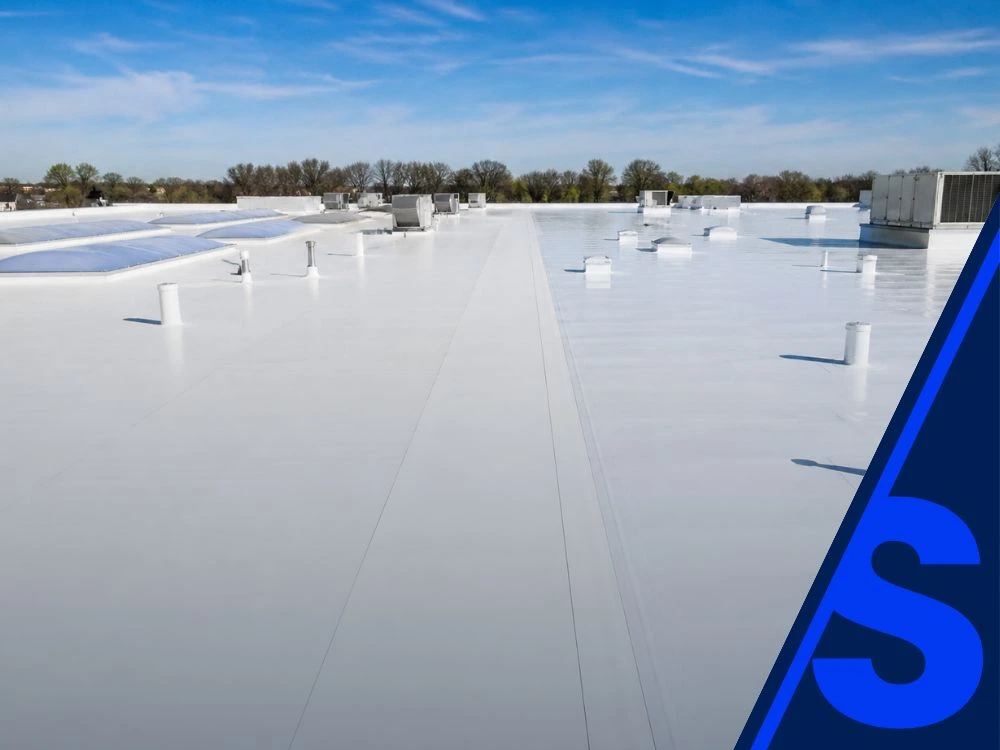
TPO (Thermoplastic Polyolefin) and PVC (Polyvinyl Chloride) are popular, white, reflective, and heat-weldable single-ply roofing membranes commonly used for flat and low-slope roofs in new construction. Both systems improve energy efficiency and meet modern code requirements. TPO is typically 15 to 25 percent more cost-effective and offers flexibility that works well for large-scale production builds such as multifamily or warehouse-style structures. PVC is more durable and provides superior resistance to chemicals, grease, and fire, making it a stronger choice for applications with higher exposure risks such as mixed-use or specialty buildings.
Is TPO roofing better than PVC?
TPO is not universally better than PVC. It is generally more cost-effective and easier to install, which makes it attractive for production-focused builders. PVC, however, offers superior durability and chemical resistance, which may be more suitable for projects with stricter performance requirements.
Does TPO or PVC last longer?
PVC roofing systems typically last longer due to their chemical composition and resistance to environmental stress. However, properly installed TPO systems can still provide strong performance within standard builder warranty timelines.
What are the disadvantages of a TPO roof?
TPO can be more susceptible to long-term degradation depending on formulation quality. Inconsistent manufacturing standards across suppliers may also impact performance. Builders must ensure proper specification and quality control.
Is TPO the same as PVC?
No, TPO and PVC are different materials. Both are single-ply membranes, but PVC contains plasticizers and offers higher chemical resistance, while TPO is a blend of polypropylene and rubber, designed to be more flexible and cost-efficient.
Why TPO vs PVC Roofing Systems Matter for Builders
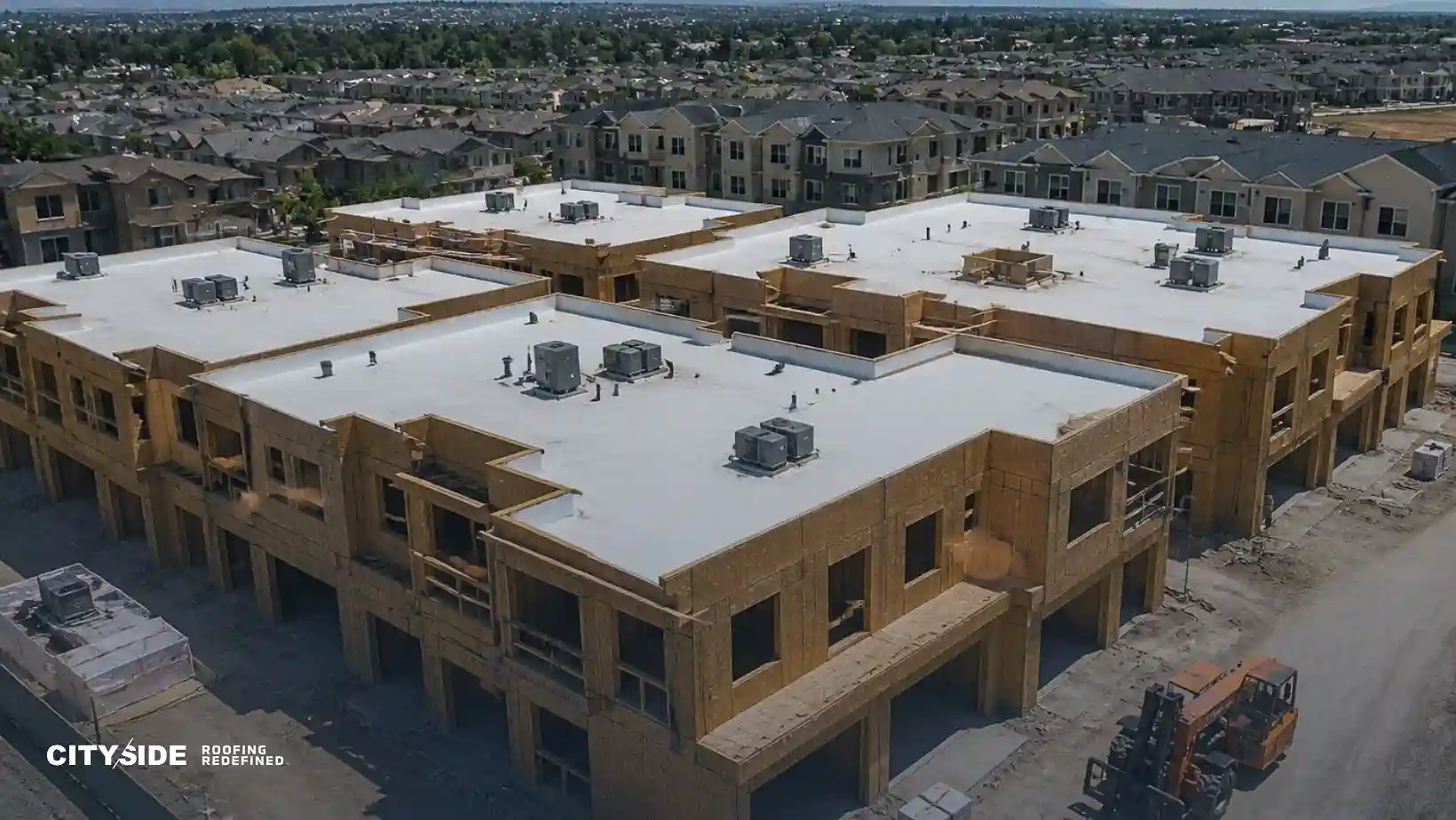
For home builders, especially those working in production environments or managing large-scale developments, roofing system selection is not just about material cost. It directly affects scheduling, inspection timelines, warranty exposure, and long-term performance across multiple units.
Flat and low-slope roofing systems are increasingly used in:
- Multifamily housing developments
- Modern residential designs
- Mixed-use buildings
- Attached housing and townhome communities
Choosing between TPO vs PVC roofing systems requires a builder-focused evaluation of:
- installation speed
- inspection requirements
- material consistency
- durability under varying conditions
- long-term warranty implications
According to the U.S. Department of Energy, reflective roofing systems can significantly reduce cooling loads and improve energy efficiency in buildings. This makes single-ply systems like TPO and PVC especially valuable in modern construction. Learn more from the U.S. Department of Energy.
For builders, this decision is not theoretical. It directly impacts production flow, cost predictability, and quality control outcomes.
Understanding TPO Roofing Systems in New Construction
TPO roofing systems are widely used in builder-driven projects due to their balance of cost and performance.
Key characteristics of TPO
- Heat-welded seams for watertight performance
- Reflective white surface for energy efficiency
- Flexible membrane for easier installation
- Lower upfront material cost
TPO is commonly selected in production environments where speed and cost efficiency are priorities. Builders working with a Roofing trade partner in Florida often choose TPO for:
- large multifamily developments
- production housing with flat sections
- cost-controlled builds
TPO installation timeline advantages
Installation Step | Typical Duration |
Substrate prep | 1 to 2 days |
Insulation installation | 1 to 2 days |
Membrane installation | 1 to 2 days |
Seaming and detailing | 1 day |
This relatively fast installation cycle supports production scheduling goals.
Builders working with CitySide Roofing often leverage TPO systems to maintain consistent timelines across multiple units.
Understanding PVC Roofing Systems in Builder Applications
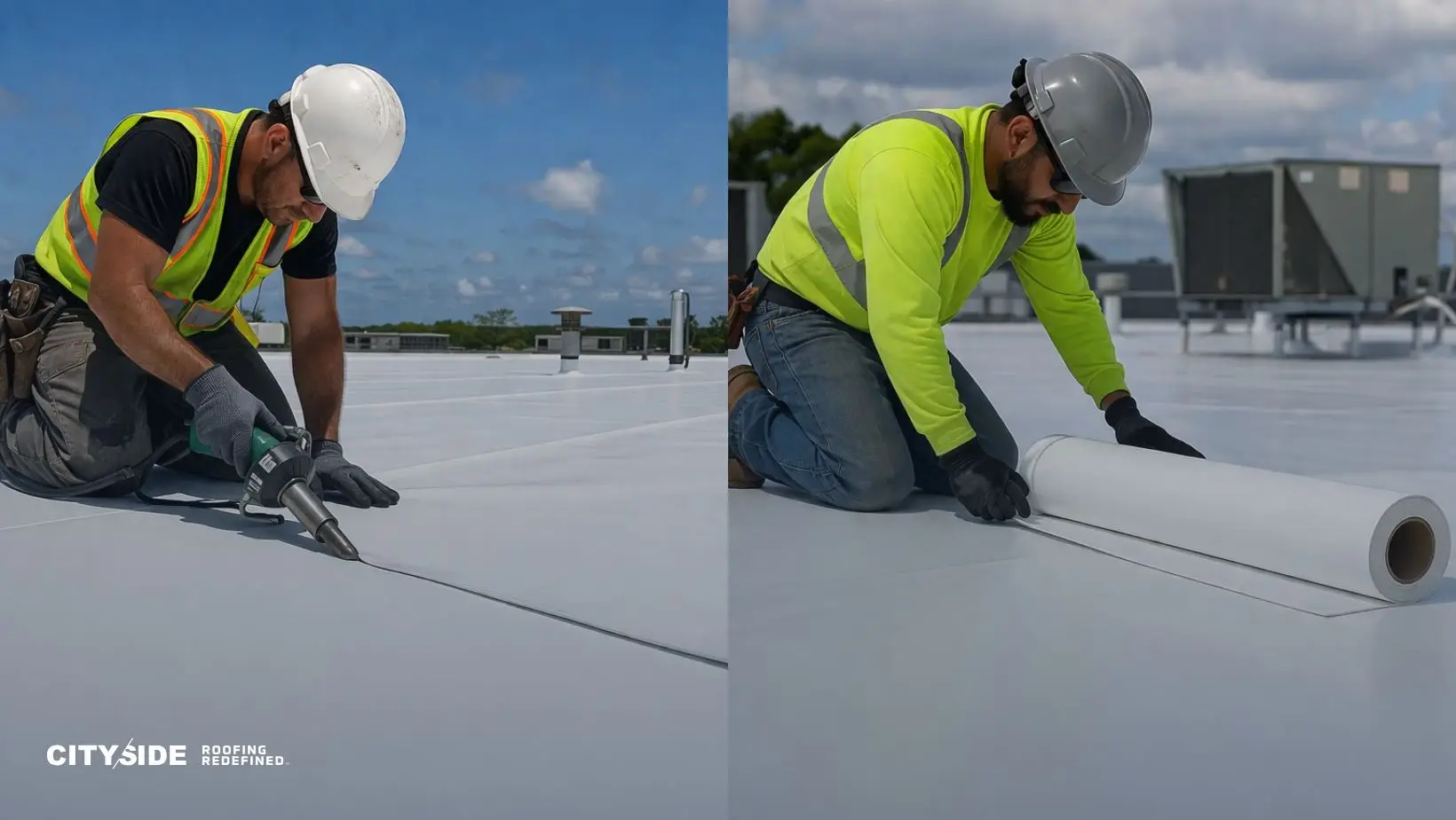
PVC roofing systems are known for durability and resistance to harsh conditions.
Key characteristics of PVC
- Strong chemical resistance
- High fire resistance rating
- Durable membrane with long lifespan
- Heat-welded seams similar to TPO
PVC is often selected for projects that require enhanced performance.
Where PVC is commonly used in new construction
- mixed-use developments
- buildings with rooftop equipment exposure
- structures requiring higher fire resistance
- projects with strict code compliance requirements
Builders working with a Roofing company in Florida often recommend PVC when durability and performance outweigh initial cost savings.
TPO vs PVC Roofing Systems: Side-by-Side Comparison
Material comparison table
Feature | TPO | PVC |
Cost | Lower | Higher |
Flexibility | High | Moderate |
Chemical resistance | Moderate | High |
Fire resistance | Good | Excellent |
Energy efficiency | High | High |
Lifespan | 15 to 20 years | 20 to 30 years |
Installation speed | Faster | Slightly slower |
This comparison highlights the trade-offs builders must consider when selecting a roofing system.
Cost Considerations for Builders
Cost plays a major role in system selection, especially in production environments.
Estimated cost comparison
Cost Category | TPO | PVC |
Material cost | Lower | Higher |
Installation labor | Moderate | Moderate to high |
Maintenance cost | Moderate | Lower long-term |
Lifecycle value | Moderate | Higher |
TPO typically provides immediate cost savings, while PVC offers stronger long-term value due to durability.
Builders working with a Roofing company for custom home builders may prefer PVC for premium projects where long-term performance is critical.
Impact on Production Scheduling
Roofing installation affects multiple downstream trades. Any delay in roofing pushes back:
- interior framing protection
- electrical and plumbing rough-ins
- insulation installation
- drywall scheduling
Scheduling comparison
Factor | TPO | PVC |
Installation speed | Faster | Slightly slower |
Inspection readiness | Similar | Similar |
Material lead time | Shorter | Longer |
Scheduling flexibility | Higher | Moderate |
TPO often supports faster scheduling cycles, making it ideal for production builders managing high volume builds.
Code Compliance and Inspection Requirements
Both TPO and PVC systems must meet building code requirements.
Roofing inspection checklist
Inspection Item | Requirement |
Membrane attachment | Verified |
Seaming quality | Verified |
Flashing installation | Required |
Drainage slope | Verified |
Penetration sealing | Required |
Builders working with a Roofing contractor in Florida benefit from trade partners who provide consistent documentation and inspection readiness.
Warranty Risk and Long-Term Performance
Warranty risk is a major concern for builders.
Common risk factors
- improper installation
- material inconsistency
- poor seam welding
- inadequate flashing
PVC typically reduces warranty risk due to its durability and chemical resistance. However, high-quality TPO installations can also perform well when installed correctly.
Builders working with Roofers for luxury home roofing installation often prioritize systems with stronger long-term reliability.
Quality Control Systems for Roofing Installation
Quality control ensures consistent performance across projects.
Quality control checklist
QC Step | Purpose |
Material verification | Prevents substitution issues |
Seam testing | Ensures watertight installation |
Flashing inspection | Reduces leak risk |
Photo documentation | Supports warranty claims |
Builders working with a Roofing trade partner in Florida for custom homes benefit from standardized QC systems across all projects.
Choosing the Right System Based on Project Type
Different projects require different roofing strategies.
Best use cases
Project Type | Recommended System |
Production housing | TPO |
Multifamily developments | TPO |
High-end custom homes | PVC |
Mixed-use buildings | PVC |
Builders can also explore broader roofing system selection strategies in Roofing company in Florida and Roofing trade partner in Florida.
Operational Efficiency and Builder Decision Making
Choosing between TPO vs PVC roofing systems is ultimately about operational efficiency.
Builders must consider:
- how quickly roofs can be installed
- how predictable scheduling becomes
- how consistent inspections are
- how much warranty exposure exists
Working with CitySide Roofing allows builders to align roofing system selection with production goals and long-term performance expectations.
Conclusion: Making the Right Choice for Your Building Project
TPO vs PVC roofing systems each offer clear advantages.
TPO provides:
- cost efficiency
- faster installation
- flexibility for production builds
PVC provides:
- superior durability
- stronger chemical resistance
- longer lifespan
The right choice depends on project priorities. Builders focused on production efficiency may lean toward TPO, while those prioritizing long-term performance may select PVC.
Partnering with a reliable Roofing company for custom home builders ensures that whichever system is chosen, it is installed correctly and documented properly.
Key Builder Takeaways
- TPO is more cost-effective and supports faster production scheduling
- PVC offers greater durability and long-term performance
- Both systems meet energy efficiency and code compliance requirements
- Roofing selection impacts scheduling, inspections, and warranty risk
- Quality installation and documentation are critical for both systems
- Builders should align roofing systems with project type and operational goals
Builders ready to select the right roofing system for their next project can connect with a trusted Roofing contractor in Florida to discuss system selection, scheduling, and installation strategy.