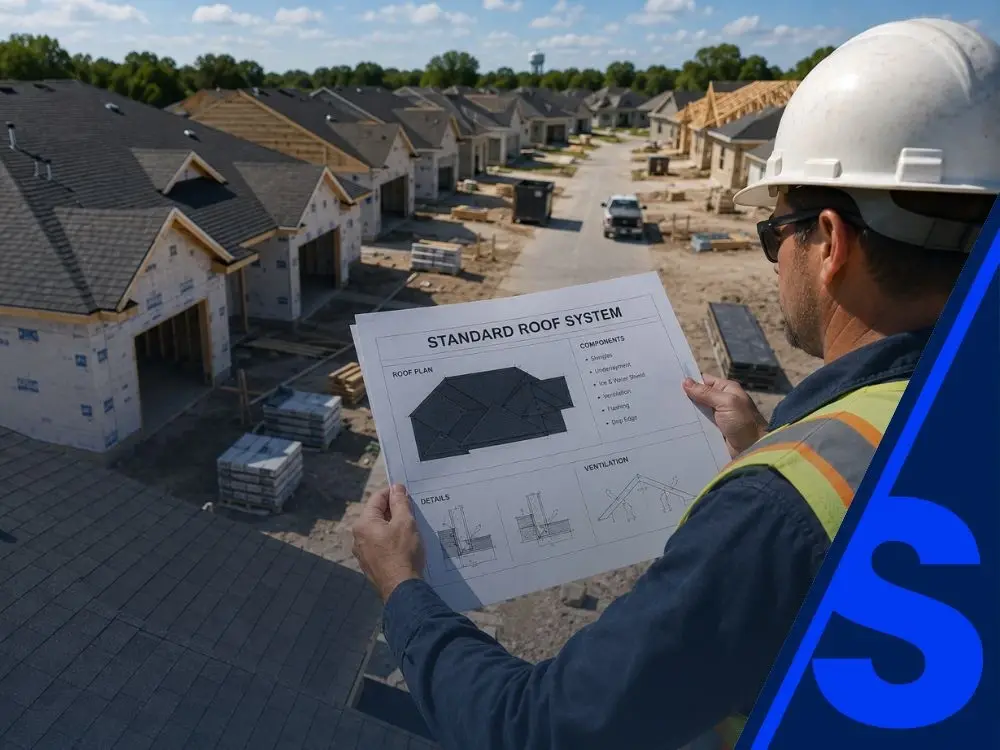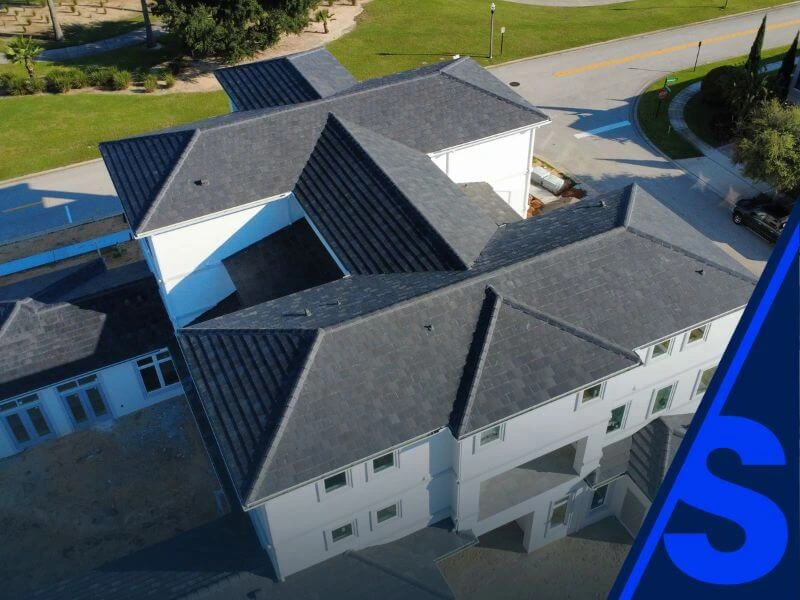
A slate roofing system is a premium, high-performance roof covering that uses individual tiles made from natural, fine-grained metamorphic rock called slate. Known for its exceptional durability and natural elegance, a properly installed slate roof is one of the longest-lasting roofing options available, often lasting anywhere from 75 to 200 years.
What Is Slate Roofing?
Slate roofing uses thin slabs of natural stone, slate, as roof tiles. These tiles are laid in overlapping courses on a roof deck, offering a durable and visually distinctive covering.
What Are Roofing Slates Made Of?
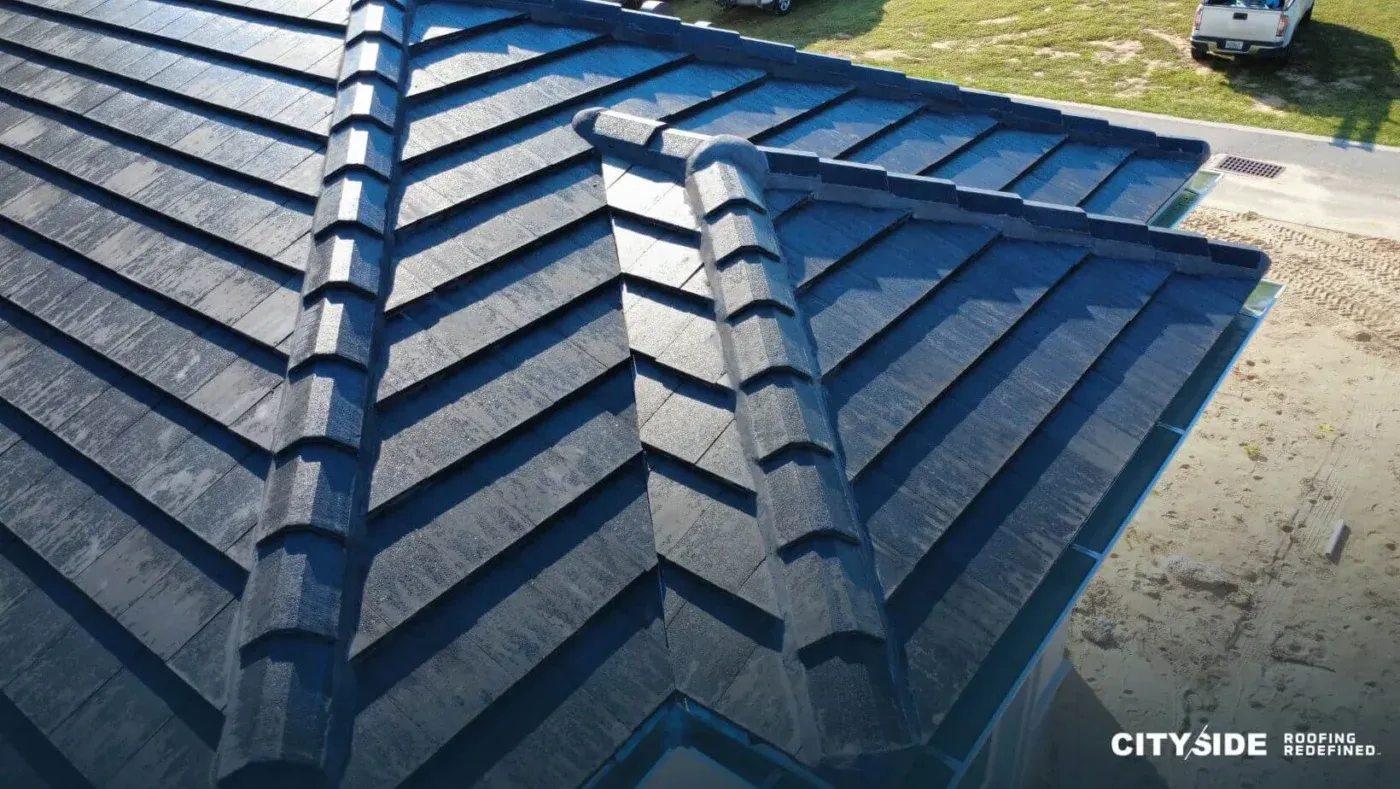
Roofing slates are made of metamorphic rock formed from clay or shale under high pressure and heat. This fine-grained stone cleaves into flat sheets, making it ideal for roofing use.
What Is Slate Used For and Why?
Slate is used for roofs because of its longevity, natural fire resistance, and aesthetic appeal. In historical and high-end construction, slate is prized for its timeless look and structural performance.
What Is the Big Advantage of a Slate Roof?
The biggest advantage of a slate roof is its durability: when properly installed, slate can last for more than a century. It resists moisture, fire, and weathering far better than many other roofing materials.
Introduction
A slate roofing system represents the pinnacle of roofing craftsmanship, combining natural beauty with unmatched longevity. For builders, specifying slate means balancing premium performance with the structural demands required to support its substantial weight. While a slate roof delivers long-term value and architectural distinction, it also introduces trade‑offs in project cost, framing requirements, and installation complexity. In this post, we explore the key considerations for implementing slate roofing systems in new construction, highlighting performance benefits, structural impacts, code compliance, and lifecycle realities.
Defining the Slate Roofing System
A slate roofing system consists of individual slate tiles fastened to the roof deck, a layer of underlayment, and metal flashings. Slate tiles are heavy and require strong structural support, so the underlying framing often needs to be designed or reinforced to carry the load. Builders must also select appropriate underlayment and flashing to ensure water tightness.
When installed correctly, a slate roof is practically maintenance‑free, unlike many other roofing systems, and its natural stone surface weathers with dignity rather than deteriorating. According to National Park Service technical preservation guidance, slate’s “durability as roofing is due to its high strength, low porosity and low absorption rate.”
Durability and Lifespan: The Premium Advantage
One of the greatest strengths of slate is its longevity. Quality slate, when installed properly, can remain intact for 75 to well over 150 years. The National Park Service has documented slate roofs lasting more than 200 years in some cases.
Its mineral composition makes slate extremely resistant to moisture and freeze-thaw cycles. That low water absorption and high structural strength mean fewer repairs, making slab slate an exceptional long-term investment for projects where longevity matters.
Aesthetic and Architectural Value
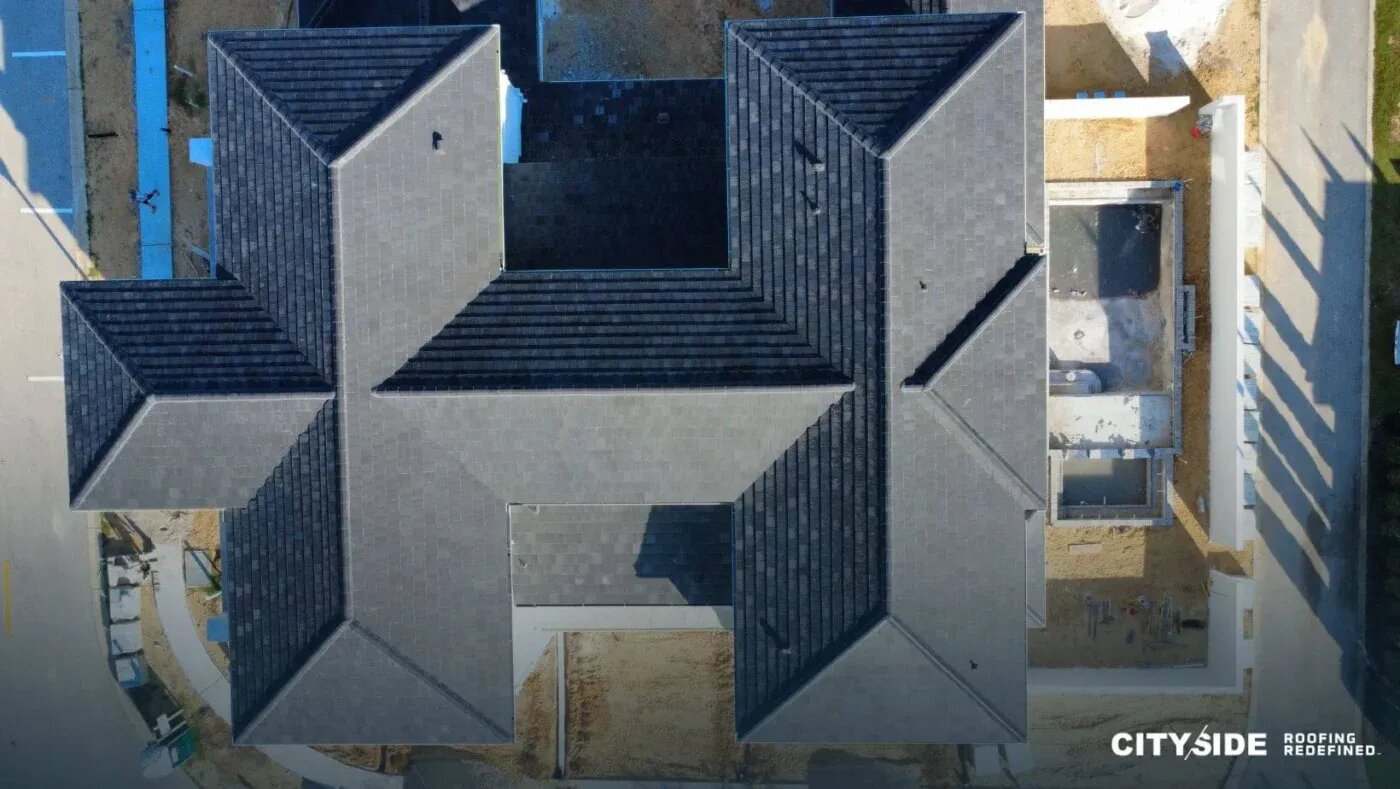
Slate is a natural stone available in a wide palette of colors, gray, green, purple, black, and red, based on its mineral content. This variety allows architects and builders to specify roofs that harmonize with a building’s style. In historic and high-end construction, slate is often used not only for functionality, but also for its visual character and longevity.
Slate’s fine-grained crystalline structure gives it a refined look and a sense of permanence that complements institutional, residential, or landmark architecture.
Structural Tradeoffs: The Weight of Slate
Slate is heavy, one of the biggest trade‑offs for builders. According to the National Park Service, slate roofs can pose significant framing challenges because “its primary drawback was its weight, making shipping costly and requiring substantial roof framing.”
This means that a live project needs to carefully model the structural capacity: rafters, trusses, and decking must accommodate the dead load of slate, and fasteners must be selected to resist failure over time. At times, using slate may necessitate thicker framing members, or reinforcing deck structures, both of which add to materials, labor, and cost.
Installation Complexity and Skilled Labor Needs
Installing a slate roofing system is highly specialized work. Unlike typical asphalt shingles, slate tiles must be aligned, nailed, and flashed with precision. According to the GSA’s specifications, nails must be copper or other suitable metals, and must be driven to exact depths to avoid damaging the slate.
Improper installation, such as using the wrong nails, insufficient underlayment, or poorly detailed flashings, can lead to failure long before the slate itself wears out. Quality installation requires slaters experienced with historic or premium roofing materials. Maintenance of slate typically involves replacing only damaged tiles, not tearing off the entire roof, which preserves the rest of the roof and reduces long-term risk.
Maintenance and Lifecycle Costs
While slate roofs are often low-maintenance, they are not maintenance-free. Flashings, nails, and fasteners can degrade over time, even if the slate remains sound. The GSA’s guidelines note that failed flashings are a common source of leaks.
Scheduled inspections are vital. According to preservation briefs, professional inspection of slates, valleys, and flashing should be conducted periodically to identify loose, cracked, or delaminated tiles.
Although replacement costs are high, slate’s lifespan often justifies the investment: fewer roof replacements, less frequent repair cycles, and preserved architectural integrity make slate a long-term value for high-end or historic projects.
Structural Framing and Code Requirements
Given slate’s weight, the roof’s framing must be engineered to meet structural demands. Builders should coordinate with structural engineers to verify that rafters, decking, and sheathing are sized and rated appropriately.
Historic preservation standards also matter. The National Park Service recommends retaining slate when possible and replacing only what is necessary using matching slate to maintain a building’s character. Structural connections, fasteners, underlayment, and flashings, should align with federal or regional preservation guidelines to ensure both safety and longevity.
Tradeoffs in Cost and Project Scheduling
Choosing slate adds significant cost and schedule complexity relative to more common roofing materials. Material costs are higher, transport must account for weight, and installation demands specialist labor. These factors often extend the construction timeline.
However, for high-end or legacy projects, the tradeoff can deliver value. A slate roof’s long lifespan can offset initial costs by reducing the frequency of roof replacement. Builders must evaluate the total cost of ownership, including maintenance, replacement, and potential re-roof cycles, when specifying slate.
Environmental and Sustainability Factors

Slate is a natural material with minimal processing, and its longevity means fewer materials used over a building’s life. Because slate can last for generations, it reduces waste and the environmental footprint compared to roofs that need more frequent replacement.
From a sustainability perspective, slate supports long-term resource efficiency. When sourced responsibly and installed correctly, it’s a low-impact roofing option that aligns well with sustainable building practices.
Risk Considerations and Reuse Potential
Slate does carry risk: poor installation, low-quality slate, or corrosion of fasteners can lead to issues. However, one of slate’s strengths is the potential for repair rather than full replacement. The National Park Service preservation guidelines recommend removing and reusing slate tiles when possible during renovation or damage repair.
Reuse reduces replacement costs and preserves historic material. Skilled slaters can salvage slate sections, re-lay them, and maintain consistent aesthetics, all while minimizing waste.
Comparing Slate with Alternative Materials
When evaluating roofing options, builders often weigh slate against alternatives:
- Asphalt shingles: Much lighter and cheaper, but significantly shorter lifespan.
- Synthetic slate: Mimics appearance but lacks the natural durability and longevity.
- Metal tile or standing seam: Offers long life and lower weight, but does not match slate’s natural stone aesthetic.
For projects where longevity, prestige, and architectural detail are priorities, a slate roofing system often remains the top choice despite the higher initial investment.
Expert Insight
According to the National Park Service, “Installed properly, slate roofs require relatively little maintenance and will last 60 to 125 years or longer depending on the type of slate employed… Some slates have been known to last over 200 years.”
This longevity is why slate remains a preferred roofing material for institutional, historic, and architecturally prominent buildings.
Builder Best Practices for Slate Roofing Systems
- Engage a structural engineer early to assess roof framing for slate’s dead load.
- Specify high-quality slate rated to ASTM or preservation standards to ensure durability and low porosity.
- Use experienced slaters for installation, including careful flashing, nailing, and underlayment.
- Incorporate routine inspections in your maintenance schedule to detect flashing or fastener issues early.
- Plan for repair and reuse logistics in construction documents to maximize lifecycle value.
Conclusion
A slate roofing system offers unmatched durability, timeless aesthetics, and long-term value for high-end construction. But these benefits come with real tradeoffs: heavier structural framing, specialized labor, and higher upfront costs. For builders who prioritize long lifecycle performance and architectural legacy, slate remains one of the most compelling roofing options. When executed correctly, with engineered framing, skilled installation, and ongoing inspection, slate roofs can endure for generations.
If you’re planning a slate roof for your next project, consult with a professional roofing partner who understands the structural, historic, and performance demands of slate roofing systems.
Related Reading: