
Tech-driven roofing scheduling: How Technology Can Improve Roofing Scheduling Efficiency

Rectangle Yellow by CitySide
Tech-driven roofing scheduling: How Technology Can Improve Roofing Scheduling Efficiency Tech-driven roofing scheduling uses automated field service software to optimize routing, dispatch crews, and track projects in real time. Transitioning from paper calendars to cloud-based platforms eliminates double-booking, reduces fuel costs, and improves communication between project managers, field crews, suppliers, and inspectors. For home builders, these systems improve production scheduling accuracy, reduce operational inefficiencies, strengthen inspection readiness, and support more predictable construction timelines across multiple active communities. What type of roof is most energy-efficient? Metal roofing systems with reflective coatings are often considered among the most energy-efficient options in new construction because they reflect solar heat and improve thermal performance. Builders frequently pair these systems with proper attic ventilation and insulation strategies to meet energy code requirements and improve long-term building efficiency. What are the 5 functional requirements of a roof? The five primary functional requirements of a roof are weather protection, structural support, drainage performance, thermal efficiency, and durability. In new construction, builders must also ensure roofing systems support code compliance, ventilation performance, and long-term warranty protection. How to calculate effective roof area? Effective roof area is typically calculated by measuring the horizontal footprint of the roof and adjusting for slope and design complexity. Builders often use pitch multipliers, overhang dimensions, valleys, dormers, and penetrations when estimating actual roofing material quantities and labor requirements. What are the disadvantages of roofing sheets? Roofing sheets can present challenges such as noise during heavy rain, thermal expansion movement, installation sensitivity, and visible fastener maintenance concerns depending on the system selected. Builders must also evaluate structural support requirements, drainage performance, and long-term code compliance when specifying sheet-based roofing systems. Why Roofing Scheduling Efficiency Matters to Builders Roofing is one of the most schedule-sensitive scopes in residential construction. For production builders and custom home builders, roofing is not simply another trade milestone. It directly affects dry-in timing, inspection sequencing, interior trade mobilization, moisture protection, and project turnover schedules. When roofing schedules become inconsistent, the effects spread quickly throughout the jobsite: Framing punch corrections delay dry-in MEP rough-ins cannot begin on time Interior materials remain exposed to moisture risk Inspection timelines become compressed Trade stacking increases jobsite inefficiency Traditional scheduling methods using spreadsheets, whiteboards, emails, and phone calls often create coordination gaps that slow production and increase labor waste. Tech-driven roofing scheduling solves these problems by replacing manual coordination with automated, cloud-connected scheduling systems that provide real-time updates, dispatch optimization, inspection tracking, and integrated field communication. According to the National Institute of Standards and Technology, fragmented communication and poor project coordination remain major causes of inefficiency in construction, reinforcing the value of digital workflow integration across production operations. For builders operating across multiple subdivisions or custom home projects, technology-driven roofing coordination has become an important operational advantage. What Tech-Driven Roofing Scheduling Means for Home Builders Tech-driven roofing scheduling refers to the use of digital systems that automate roofing coordination based on real construction milestones and field conditions. Instead of relying on manual updates, automated systems can: Trigger roofing schedules after framing completion Dispatch crews based on availability and proximity Coordinate material deliveries automatically Notify project managers about inspection readiness Track field progress through mobile reporting Store documentation for warranty and quality control records For builders working with a dependable Roofing trade partner in Florida, this creates more predictable production flow and fewer avoidable delays. These systems are especially valuable in large-scale production environments where dozens of homes may be moving through framing and dry-in simultaneously. The Operational Problems Caused by Manual Scheduling Many builders still rely on disconnected communication systems to coordinate roofing activities. Superintendents may text roofing crews directly, procurement teams may place orders independently, and inspections may be requested separately from installation tracking. This fragmented process creates several major inefficiencies. Double-booking and crew conflicts Manual scheduling often leads to multiple projects competing for the same crew resources. Automated systems eliminate these conflicts by managing crew capacity in real time. Material delivery mismatches Roofing materials arriving too early create clutter and exposure risk, while late deliveries delay production. Technology-driven scheduling aligns deliveries with verified project readiness. Inspection bottlenecks Inspection delays frequently occur because project teams fail to request inspections immediately after installation milestones are completed. Automated scheduling systems trigger inspection workflows automatically. Poor field visibility Builders managing multiple communities need instant visibility into roofing progress. Cloud-based systems allow project managers to monitor every active lot from centralized dashboards. Builders that partner with a Roofing company in Florida that embraces digital coordination gain significant operational advantages across their construction pipeline. Cloud-Based Scheduling Platforms and Real-Time Coordination Cloud-based scheduling systems are the foundation of tech-driven roofing scheduling. These platforms allow field crews, suppliers, project managers, and office teams to work from the same live project data. Benefits of cloud-connected roofing scheduling Operational Area Manual Process Cloud-Based Process Crew dispatch Phone calls and texts Automated scheduling Material tracking Separate procurement updates Integrated live tracking Inspection coordination Manual submission Automated notifications Project visibility Spreadsheet reporting Real-time dashboards Documentation Paper-based Centralized digital records Builders gain better coordination because all stakeholders can access updated information instantly. This reduces confusion, improves accountability, and accelerates production decision-making. Automated Crew Dispatch and Route Optimization One of the most important benefits of tech-driven roofing scheduling is dispatch optimization. Modern systems use algorithms to assign roofing crews based on: Geographic proximity Crew specialization Jobsite readiness Material delivery status Weather conditions Inspection schedules This reduces wasted travel time and improves labor utilization. Crew dispatch comparison Dispatch Factor Traditional Scheduling Tech-Driven Scheduling Crew assignment Manual Automated Travel efficiency Inconsistent Optimized routing Schedule changes Reactive Dynamic updates Delay recovery Slow Immediate reassignment Multi-community coordination Difficult Centralized visibility Builders working with Roofers for luxury home roofing installation often benefit from these systems because custom rooflines require more precise labor planning and sequencing. Production Scheduling Efficiency in New Construction Roofing sits directly on the critical path of residential construction. If roofing falls behind: Drywall installation is delayed Interior humidity risk increases Mechanical installations shift out of sequence Final completion dates become unreliable Technology-driven scheduling systems help maintain predictable production pacing by linking roofing activities to milestone-based triggers. Typical automated roofing workflow Framing inspection passes Roofing schedule is triggered automatically Material release request is generated Crew assignment is optimized Inspection readiness is tracked digitally Completion photos are uploaded to the system This level of coordination significantly reduces downtime between construction phases. Material Coordination and Supply Chain Visibility Supply chain coordination remains one of the largest operational challenges for builders. Tech-driven roofing scheduling platforms integrate procurement timing with project milestones to improve material management. Roofing material scheduling table Material Type Typical Lead Time Automated Trigger Asphalt shingles 3 to 7 days Framing completion Metal roofing systems 2 to 4 weeks Roof measurements confirmed Tile roofing 4 to 6 weeks Structural approval complete Underlayment systems 2 to 5 days Deck installation verified Builders evaluating roofing assemblies for different home types can explore Roofing systems for builders choosing the right roofing system for different types of homes custom vs track homes to better align roofing specifications with scheduling and production goals. Inspection Readiness and Code Compliance Roofing inspections are a major source of production delays when documentation and sequencing are poorly managed. Tech-driven roofing scheduling systems improve inspection readiness by: Tracking milestone completion automatically Triggering inspection notifications Storing digital field photos Logging inspection outcomes centrally Monitoring correction item status Roofing inspection compliance checklist Inspection Item Manual Risk Technology Benefit Deck preparation Missed corrections Automated milestone checks Underlayment verification Incomplete documentation Digital photo records Flashing inspection Field inconsistency Standardized checklists Ventilation review Overlooked details Systemized verification Final roof inspection Delayed scheduling Automated submission workflows Builders partnering with a Roofing contractor in Florida that supports digital inspection tracking reduce reinspection cycles and improve production consistency. Quality Control Systems and Warranty Protection Builders today must think beyond installation speed. Long-term quality control and warranty performance are equally important. Tech-driven roofing scheduling supports stronger quality systems by documenting installation stages and creating lot-level traceability. Examples include: Required photo uploads before concealment Material verification by lot Digital punch-list tracking Timestamped installation records Inspection pass documentation This creates a stronger defense against future warranty claims and improves consistency across large-scale developments. Builders comparing traditional roofing components with newer systems may also benefit from reviewing Organic felt roof underlayment traditional choice or outdated option to understand how material selection can affect scheduling, durability, and long-term performance. Multi-Community Visibility for Production Builders Production home builders often manage several active communities simultaneously. Without centralized scheduling systems, roofing progress becomes difficult to track accurately. Cloud-based dashboards solve this problem by giving construction managers real-time visibility into: Homes ready for roofing Active crew assignments Pending inspections Material delivery status Completion rates by subdivision Example multi-community dashboard Community Homes Ready Crews Scheduled Inspections Pending Community A 10 8 3 Community B 14 12 5 Community C 6 6 1 Community D 9 7 2 This level of oversight helps builders rebalance crews, manage delays proactively, and maintain more stable cycle times. Cost Reduction Through Technology-Driven Scheduling The financial benefits of tech-driven roofing scheduling extend beyond labor savings. Builders also reduce: Fuel costs through route optimization Administrative overhead Idle labor hours Material handling waste Delay-related carrying costs Cost comparison table Cost Category Manual Scheduling Tech-Driven Scheduling Crew idle time High Reduced Fuel consumption Higher Optimized routes Administrative coordination Labor intensive Automated Schedule conflicts Frequent Reduced Material waste Moderate Lower Production delays More common Less frequent As construction costs continue rising, builders that improve operational efficiency gain a stronger competitive advantage. Why Tech-Driven Roofing Scheduling Matters for Custom Builders Custom home projects often involve: Complex roof geometry Multiple material types Extended lead times Specialized installation details Higher warranty expectations These variables increase the need for precise scheduling and documentation. Builders working with a Roofing trade partner in Florida for custom homes benefit from better coordination between design requirements, procurement timing, installation sequencing, and quality verification. Technology-driven systems help ensure that complex projects maintain schedule discipline without sacrificing workmanship standards. The Future of Roofing Scheduling Technology Construction technology continues evolving rapidly, and roofing scheduling systems are becoming more advanced every year. Future developments are expected to include: AI-driven predictive scheduling Drone-assisted inspection workflows Automated weather risk analysis Real-time supplier inventory integration Advanced production forecasting dashboards Builders that adopt these systems early position themselves to improve scalability, reduce waste, and maintain more consistent production outcomes. Conclusion: Why Builders Are Adopting Tech-Driven Roofing Scheduling Tech-driven roofing scheduling has become an important operational strategy for builders seeking better control over production timelines, labor coordination, inspection readiness, and warranty protection. By replacing fragmented manual coordination with integrated digital systems, builders gain: More predictable roofing schedules Better field visibility Faster inspection coordination Improved material timing Stronger quality documentation Reduced operational waste Roofing remains one of the most critical milestones in residential construction. Builders that modernize roofing coordination gain measurable advantages in efficiency, consistency, and long-term project performance. Builders looking for a reliable Roofing company for custom home builders can work with CitySide Roofing to improve scheduling coordination, production visibility, and roofing execution across new construction projects. Key Builder Takeaways Tech-driven roofing scheduling improves production visibility and labor coordination Cloud-based systems reduce double-booking and scheduling conflicts Automated dispatch improves crew utilization and lowers fuel costs Real-time inspection tracking supports code compliance and faster approvals Digital documentation strengthens quality control and warranty protection Material coordination systems reduce delays and improve operational efficiency Builders ready to improve roofing scheduling efficiency and production coordination can connect with a trusted Roofing contractor in Florida through the official contact page.
Tech-driven roofing scheduling: How Technology Can Improve Roofing Scheduling Efficiency

Table of Contents

Tech-driven roofing scheduling uses automated field service software to optimize routing, dispatch crews, and track projects in real time. Transitioning from paper calendars to cloud-based platforms eliminates double-booking, reduces fuel costs, and improves communication between project managers, field crews, suppliers, and inspectors. For home builders, these systems improve production scheduling accuracy, reduce operational inefficiencies, strengthen inspection readiness, and support more predictable construction timelines across multiple active communities.

What type of roof is most energy-efficient?

Metal roofing systems with reflective coatings are often considered among the most energy-efficient options in new construction because they reflect solar heat and improve thermal performance. Builders frequently pair these systems with proper attic ventilation and insulation strategies to meet energy code requirements and improve long-term building efficiency.

What are the 5 functional requirements of a roof?

The five primary functional requirements of a roof are weather protection, structural support, drainage performance, thermal efficiency, and durability. In new construction, builders must also ensure roofing systems support code compliance, ventilation performance, and long-term warranty protection.

How to calculate effective roof area?

Effective roof area is typically calculated by measuring the horizontal footprint of the roof and adjusting for slope and design complexity. Builders often use pitch multipliers, overhang dimensions, valleys, dormers, and penetrations when estimating actual roofing material quantities and labor requirements.

What are the disadvantages of roofing sheets?

Roofing sheets can present challenges such as noise during heavy rain, thermal expansion movement, installation sensitivity, and visible fastener maintenance concerns depending on the system selected. Builders must also evaluate structural support requirements, drainage performance, and long-term code compliance when specifying sheet-based roofing systems.

Why Roofing Scheduling Efficiency Matters to Builders

Roofing is one of the most schedule-sensitive scopes in residential construction. For production builders and custom home builders, roofing is not simply another trade milestone. It directly affects dry-in timing, inspection sequencing, interior trade mobilization, moisture protection, and project turnover schedules.

When roofing schedules become inconsistent, the effects spread quickly throughout the jobsite:

  • Framing punch corrections delay dry-in
  • MEP rough-ins cannot begin on time
  • Interior materials remain exposed to moisture risk
  • Inspection timelines become compressed
  • Trade stacking increases jobsite inefficiency

Traditional scheduling methods using spreadsheets, whiteboards, emails, and phone calls often create coordination gaps that slow production and increase labor waste.

Tech-driven roofing scheduling solves these problems by replacing manual coordination with automated, cloud-connected scheduling systems that provide real-time updates, dispatch optimization, inspection tracking, and integrated field communication.

According to the National Institute of Standards and Technology, fragmented communication and poor project coordination remain major causes of inefficiency in construction, reinforcing the value of digital workflow integration across production operations.

For builders operating across multiple subdivisions or custom home projects, technology-driven roofing coordination has become an important operational advantage.

What Tech-Driven Roofing Scheduling Means for Home Builders

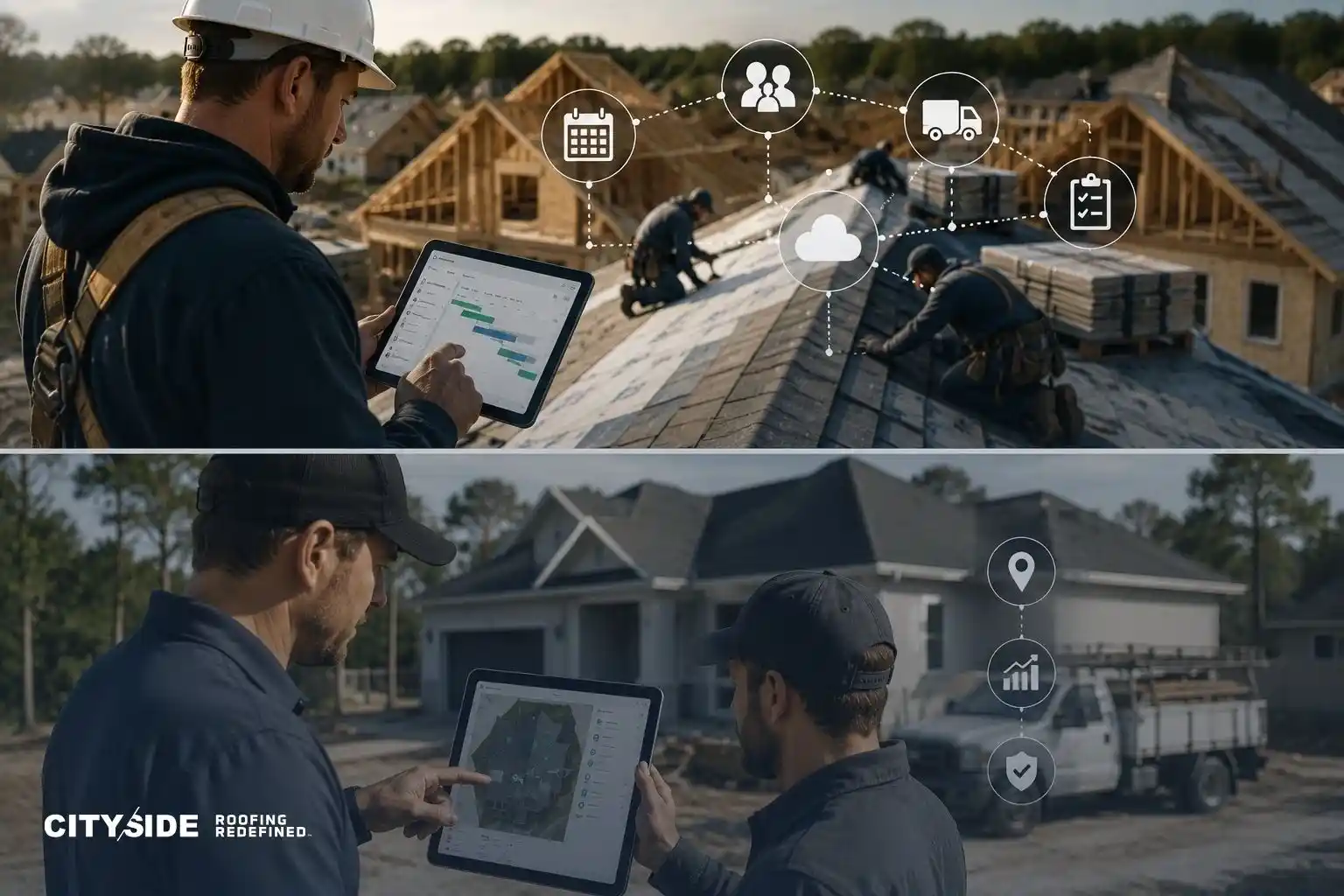
Man holding a tablet supervises roofers working on a house. Digital icons overlayed, representing planning and logistics, suggest coordination and efficiency.

Tech-driven roofing scheduling refers to the use of digital systems that automate roofing coordination based on real construction milestones and field conditions.

Instead of relying on manual updates, automated systems can:

  • Trigger roofing schedules after framing completion
  • Dispatch crews based on availability and proximity
  • Coordinate material deliveries automatically
  • Notify project managers about inspection readiness
  • Track field progress through mobile reporting
  • Store documentation for warranty and quality control records

For builders working with a dependable Roofing trade partner in Florida, this creates more predictable production flow and fewer avoidable delays.

These systems are especially valuable in large-scale production environments where dozens of homes may be moving through framing and dry-in simultaneously.

The Operational Problems Caused by Manual Scheduling

Many builders still rely on disconnected communication systems to coordinate roofing activities. Superintendents may text roofing crews directly, procurement teams may place orders independently, and inspections may be requested separately from installation tracking.

This fragmented process creates several major inefficiencies.

Double-booking and crew conflicts

Manual scheduling often leads to multiple projects competing for the same crew resources. Automated systems eliminate these conflicts by managing crew capacity in real time.

Material delivery mismatches

Roofing materials arriving too early create clutter and exposure risk, while late deliveries delay production. Technology-driven scheduling aligns deliveries with verified project readiness.

Inspection bottlenecks

Inspection delays frequently occur because project teams fail to request inspections immediately after installation milestones are completed. Automated scheduling systems trigger inspection workflows automatically.

Poor field visibility

Builders managing multiple communities need instant visibility into roofing progress. Cloud-based systems allow project managers to monitor every active lot from centralized dashboards.

Builders that partner with a Roofing company in Florida that embraces digital coordination gain significant operational advantages across their construction pipeline.

Cloud-Based Scheduling Platforms and Real-Time Coordination

Cloud-based scheduling systems are the foundation of tech-driven roofing scheduling.

These platforms allow field crews, suppliers, project managers, and office teams to work from the same live project data.

Benefits of cloud-connected roofing scheduling

Operational Area

Manual Process

Cloud-Based Process

Crew dispatch

Phone calls and texts

Automated scheduling

Material tracking

Separate procurement updates

Integrated live tracking

Inspection coordination

Manual submission

Automated notifications

Project visibility

Spreadsheet reporting

Real-time dashboards

Documentation

Paper-based

Centralized digital records

Builders gain better coordination because all stakeholders can access updated information instantly.

This reduces confusion, improves accountability, and accelerates production decision-making.

Automated Crew Dispatch and Route Optimization

Construction workers on rooftops use tablets to track projects. Icons for scheduling, collaboration, and cloud services appear, enhancing efficiency.

One of the most important benefits of tech-driven roofing scheduling is dispatch optimization.

Modern systems use algorithms to assign roofing crews based on:

  • Geographic proximity
  • Crew specialization
  • Jobsite readiness
  • Material delivery status
  • Weather conditions
  • Inspection schedules

This reduces wasted travel time and improves labor utilization.

Crew dispatch comparison

Dispatch Factor

Traditional Scheduling

Tech-Driven Scheduling

Crew assignment

Manual

Automated

Travel efficiency

Inconsistent

Optimized routing

Schedule changes

Reactive

Dynamic updates

Delay recovery

Slow

Immediate reassignment

Multi-community coordination

Difficult

Centralized visibility

Builders working with Roofers for luxury home roofing installation often benefit from these systems because custom rooflines require more precise labor planning and sequencing.

Production Scheduling Efficiency in New Construction

Roofing sits directly on the critical path of residential construction.

If roofing falls behind:

  • Drywall installation is delayed
  • Interior humidity risk increases
  • Mechanical installations shift out of sequence
  • Final completion dates become unreliable

Technology-driven scheduling systems help maintain predictable production pacing by linking roofing activities to milestone-based triggers.

Typical automated roofing workflow

  1. Framing inspection passes
  2. Roofing schedule is triggered automatically
  3. Material release request is generated
  4. Crew assignment is optimized
  5. Inspection readiness is tracked digitally
  6. Completion photos are uploaded to the system

This level of coordination significantly reduces downtime between construction phases.

Material Coordination and Supply Chain Visibility

Supply chain coordination remains one of the largest operational challenges for builders.

Tech-driven roofing scheduling platforms integrate procurement timing with project milestones to improve material management.

Roofing material scheduling table

Material Type

Typical Lead Time

Automated Trigger

Asphalt shingles

3 to 7 days

Framing completion

Metal roofing systems

2 to 4 weeks

Roof measurements confirmed

Tile roofing

4 to 6 weeks

Structural approval complete

Underlayment systems

2 to 5 days

Deck installation verified

Builders evaluating roofing assemblies for different home types can explore Roofing systems for builders choosing the right roofing system for different types of homes custom vs track homes to better align roofing specifications with scheduling and production goals.

Inspection Readiness and Code Compliance

Roofing inspections are a major source of production delays when documentation and sequencing are poorly managed.

Tech-driven roofing scheduling systems improve inspection readiness by:

  • Tracking milestone completion automatically
  • Triggering inspection notifications
  • Storing digital field photos
  • Logging inspection outcomes centrally
  • Monitoring correction item status

Roofing inspection compliance checklist

Inspection Item

Manual Risk

Technology Benefit

Deck preparation

Missed corrections

Automated milestone checks

Underlayment verification

Incomplete documentation

Digital photo records

Flashing inspection

Field inconsistency

Standardized checklists

Ventilation review

Overlooked details

Systemized verification

Final roof inspection

Delayed scheduling

Automated submission workflows

Builders partnering with a Roofing contractor in Florida that supports digital inspection tracking reduce reinspection cycles and improve production consistency.

Quality Control Systems and Warranty Protection

Builders today must think beyond installation speed. Long-term quality control and warranty performance are equally important.

Tech-driven roofing scheduling supports stronger quality systems by documenting installation stages and creating lot-level traceability.

Examples include:

  • Required photo uploads before concealment
  • Material verification by lot
  • Digital punch-list tracking
  • Timestamped installation records
  • Inspection pass documentation

This creates a stronger defense against future warranty claims and improves consistency across large-scale developments.

Builders comparing traditional roofing components with newer systems may also benefit from reviewing Organic felt roof underlayment traditional choice or outdated option to understand how material selection can affect scheduling, durability, and long-term performance.

Multi-Community Visibility for Production Builders

Production home builders often manage several active communities simultaneously.

Without centralized scheduling systems, roofing progress becomes difficult to track accurately.

Cloud-based dashboards solve this problem by giving construction managers real-time visibility into:

  • Homes ready for roofing
  • Active crew assignments
  • Pending inspections
  • Material delivery status
  • Completion rates by subdivision

Example multi-community dashboard

Community

Homes Ready

Crews Scheduled

Inspections Pending

Community A

10

8

3

Community B

14

12

5

Community C

6

6

1

Community D

9

7

2

This level of oversight helps builders rebalance crews, manage delays proactively, and maintain more stable cycle times.

Cost Reduction Through Technology-Driven Scheduling

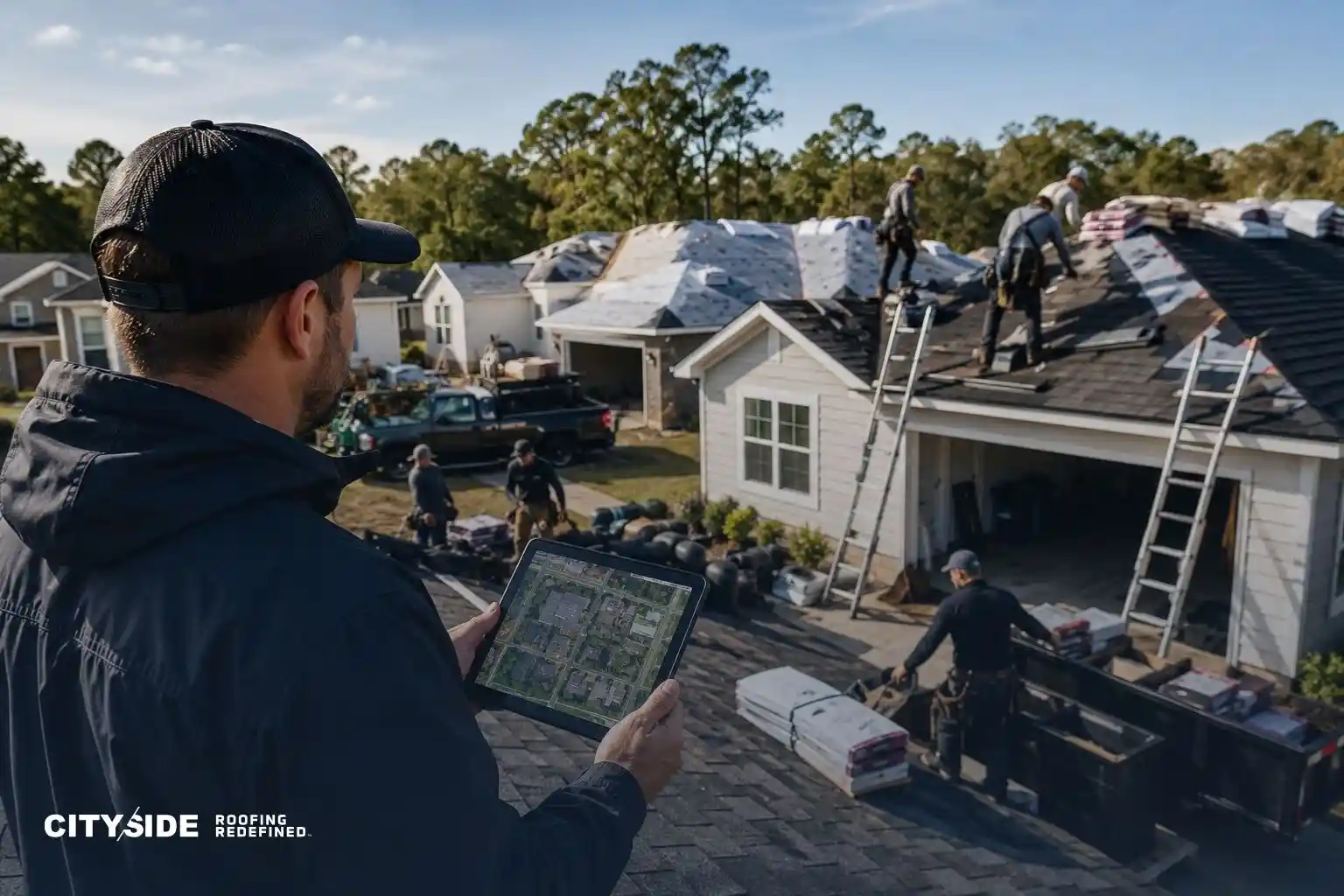
A man with a tablet supervises roofers working on a suburban home, surrounded by tools and ladders under a clear blue sky. Signs show "CitySide."

The financial benefits of tech-driven roofing scheduling extend beyond labor savings.

Builders also reduce:

  • Fuel costs through route optimization
  • Administrative overhead
  • Idle labor hours
  • Material handling waste
  • Delay-related carrying costs

Cost comparison table

Cost Category

Manual Scheduling

Tech-Driven Scheduling

Crew idle time

High

Reduced

Fuel consumption

Higher

Optimized routes

Administrative coordination

Labor intensive

Automated

Schedule conflicts

Frequent

Reduced

Material waste

Moderate

Lower

Production delays

More common

Less frequent

As construction costs continue rising, builders that improve operational efficiency gain a stronger competitive advantage.

Why Tech-Driven Roofing Scheduling Matters for Custom Builders

Custom home projects often involve:

  • Complex roof geometry
  • Multiple material types
  • Extended lead times
  • Specialized installation details
  • Higher warranty expectations

These variables increase the need for precise scheduling and documentation.

Builders working with a Roofing trade partner in Florida for custom homes benefit from better coordination between design requirements, procurement timing, installation sequencing, and quality verification.

Technology-driven systems help ensure that complex projects maintain schedule discipline without sacrificing workmanship standards.

The Future of Roofing Scheduling Technology

Construction technology continues evolving rapidly, and roofing scheduling systems are becoming more advanced every year.

Future developments are expected to include:

  • AI-driven predictive scheduling
  • Drone-assisted inspection workflows
  • Automated weather risk analysis
  • Real-time supplier inventory integration
  • Advanced production forecasting dashboards

Builders that adopt these systems early position themselves to improve scalability, reduce waste, and maintain more consistent production outcomes.

Conclusion: Why Builders Are Adopting Tech-Driven Roofing Scheduling

Tech-driven roofing scheduling has become an important operational strategy for builders seeking better control over production timelines, labor coordination, inspection readiness, and warranty protection.

By replacing fragmented manual coordination with integrated digital systems, builders gain:

  • More predictable roofing schedules
  • Better field visibility
  • Faster inspection coordination
  • Improved material timing
  • Stronger quality documentation
  • Reduced operational waste

Roofing remains one of the most critical milestones in residential construction. Builders that modernize roofing coordination gain measurable advantages in efficiency, consistency, and long-term project performance.

Builders looking for a reliable Roofing company for custom home builders can work with CitySide Roofing to improve scheduling coordination, production visibility, and roofing execution across new construction projects.

Key Builder Takeaways

  • Tech-driven roofing scheduling improves production visibility and labor coordination
  • Cloud-based systems reduce double-booking and scheduling conflicts
  • Automated dispatch improves crew utilization and lowers fuel costs
  • Real-time inspection tracking supports code compliance and faster approvals
  • Digital documentation strengthens quality control and warranty protection
  • Material coordination systems reduce delays and improve operational efficiency

Builders ready to improve roofing scheduling efficiency and production coordination can connect with a trusted Roofing contractor in Florida through the official contact page.
Share this page on: