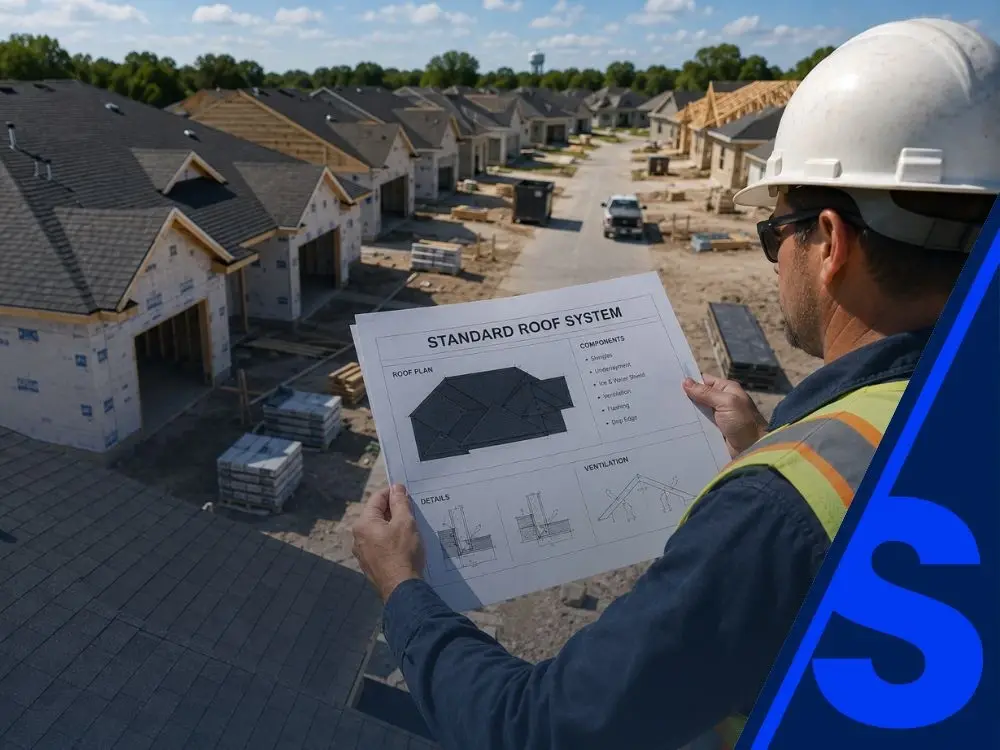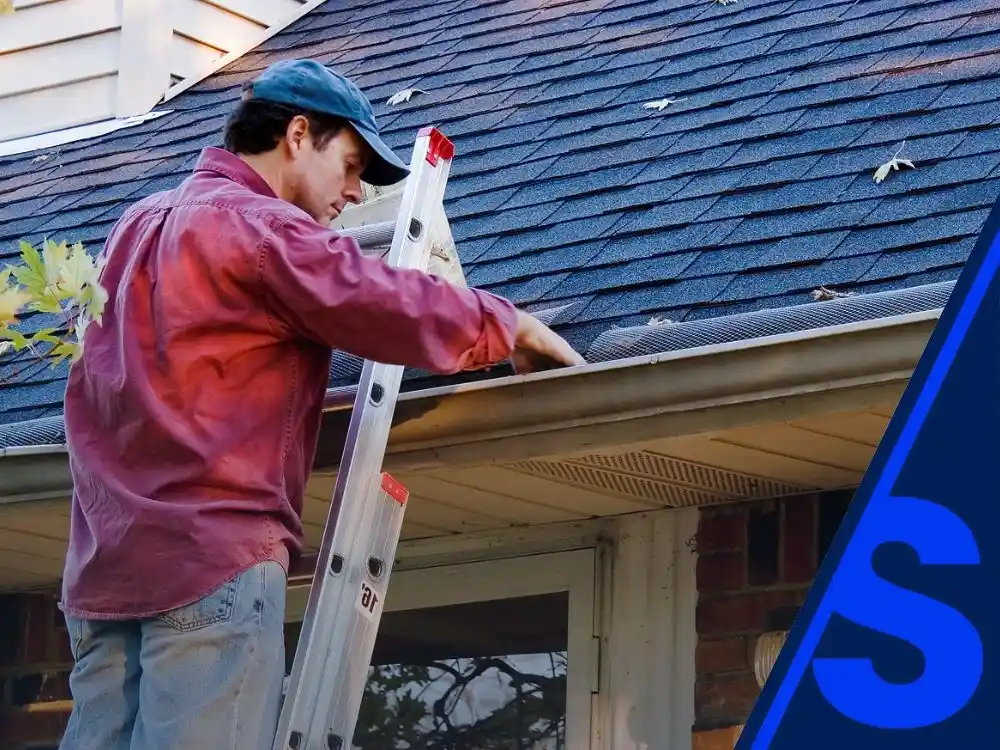
Preventative roof maintenance, including bi-annual inspections, debris removal, and gutter cleaning, can extend a roof’s lifespan by 30% to 100%. Key tasks include clearing gutters, trimming overhanging branches, checking for cracked caulk, and inspecting flashing for leaks in spring and fall. For builders, a proactive maintenance strategy reduces warranty exposure, supports long-term performance, and protects construction schedules by preventing avoidable roofing failures.
What kind of maintenance does a roof need?
A roof needs routine inspections, drainage clearing, flashing checks, sealant review, and surface condition monitoring. For builders, maintenance also includes documentation, warranty alignment, and ensuring the roof system continues performing to spec after project closeout.
What are examples of preventative maintenance?
Examples include scheduled roof inspections, cleaning gutters and scuppers, removing debris, checking penetrations, resealing minor joints, and verifying flashing integrity before small issues become costly failures.
What is roof maintenance?
Roof maintenance is the planned process of inspecting, servicing, and protecting a roof system to prevent premature deterioration, reduce leaks, and extend service life, especially in high-demand climates like Florida.
What is the 10 rule of preventive maintenance?
The 10 rule generally refers to spending a small percentage on preventative upkeep now to avoid significantly higher repair or replacement costs later. In roofing, small proactive measures often prevent major structural or warranty-level failures.
The National Institute of Building Sciences notes that proactive maintenance is one of the most cost-effective ways to reduce long-term facility risk and avoid premature component failure.
Preventative roof maintenance is often discussed as a property management issue, but for home builders, it is a construction performance issue. Roofing systems are one of the most warranty-sensitive scopes in residential development, and failures rarely begin with catastrophic events. Most begin with small drainage issues, overlooked flashing details, or minor penetrations that go unaddressed.
For builders operating in Florida’s demanding climate, preventative roof maintenance is not about homeowner upkeep. It is about protecting production quality, reducing callbacks, maintaining code compliance, and ensuring long-term durability across entire communities.
Working with a proven roofing trade partner in Florida like CitySide Roofing allows builders to integrate preventative strategies into closeout processes, quality control systems, and long-term warranty planning.
This guide outlines best practices builders can implement across new construction portfolios to improve roof performance and reduce long-term risk.
Why Preventative Roof Maintenance Matters for Builders
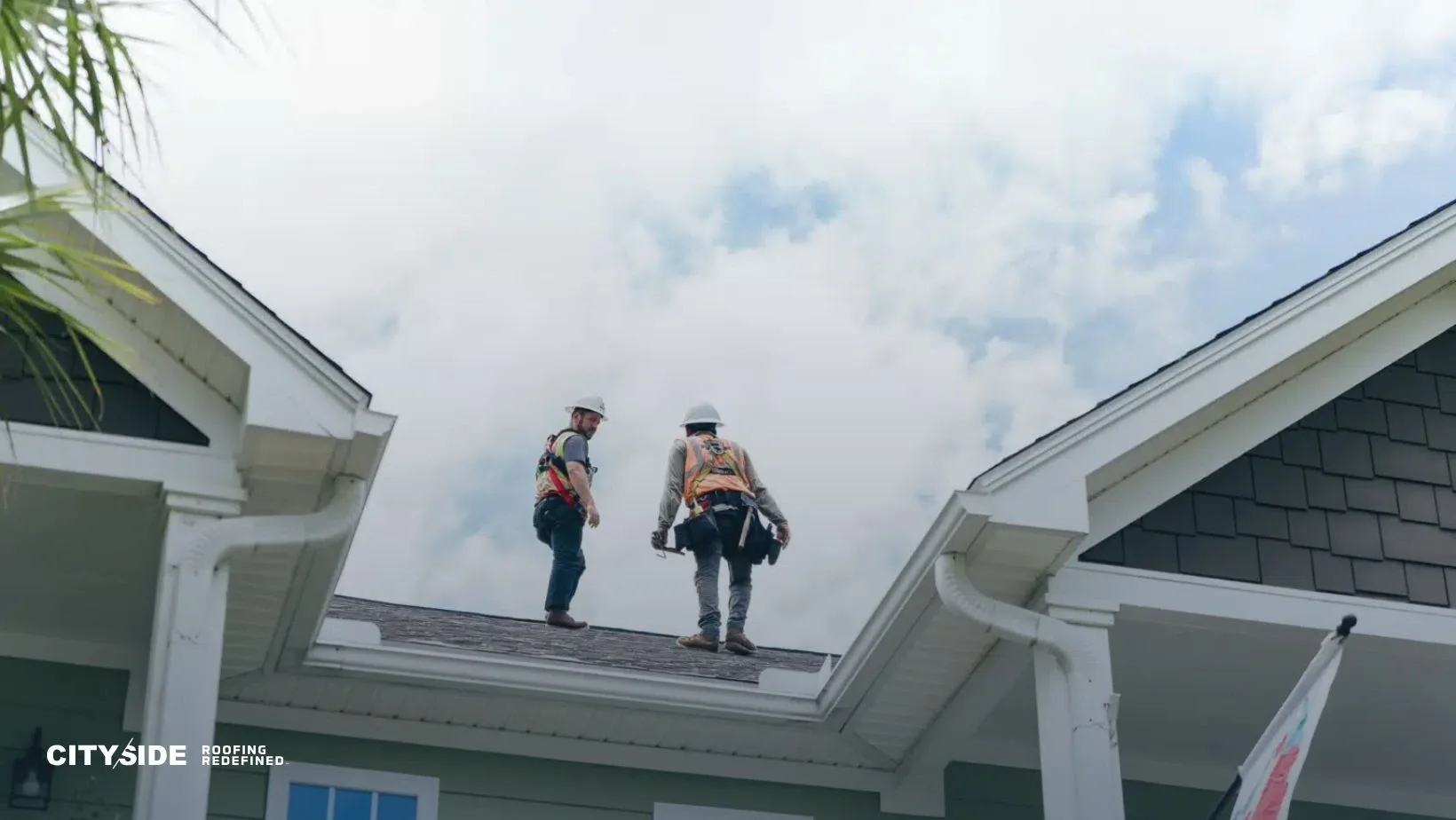
Roof maintenance in a builder context is about risk mitigation and operational consistency. Even with strong installation standards, environmental exposure begins immediately after completion.
Florida roofs face:
- High UV exposure year-round
- Heavy seasonal rainfall
- Wind-driven rain events
- Humidity-driven moisture cycling
- Debris accumulation in valleys and gutters
Preventative roof maintenance supports builders by:
- Reducing warranty claims tied to drainage and flashing
- Preventing early membrane or tile system deterioration
- Improving inspection outcomes during warranty periods
- Protecting builder reputation in large-scale developments
A Roofing contractor in Florida with builder-focused systems can help ensure preventative processes are standardized across projects.
Preventative Roof Maintenance as Part of Quality Control Systems
Builders already manage detailed QA processes during framing, MEP, and final inspections. Roofing maintenance should be viewed similarly.
A preventative roof maintenance plan includes:
- Scheduled post-install inspection intervals
- Standardized documentation procedures
- Trade partner accountability
- Clear drainage performance verification
- Integration into warranty response systems
CitySide’s builder-first approach emphasizes operational excellence and system consistency. Builders partnering with CitySide Roofing gain access to structured processes that reduce variability across subdivisions and production schedules.
Bi-Annual Inspection Scheduling for New Construction Portfolios
The most effective preventative roof maintenance programs are built around predictable inspection cycles.
Builders should plan:
- Spring inspection (pre-rainy season)
- Fall inspection (post-summer storm season)
These windows align with Florida’s climate exposure cycles and allow early detection of:
- Flashing separation
- Sealant cracking
- Drainage blockage
- Minor surface displacement
Recommended Builder Inspection Timeline
| Inspection Phase | Timing | Builder Benefit |
| Post-install QC review | Immediately after completion | Confirms system installed to spec |
| First-year inspection | 6 to 12 months | Identifies early settlement issues |
| Bi-annual inspections | Spring and Fall | Reduces warranty escalation risk |
| Storm-event follow-up | After major wind/rain events | Prevents hidden water intrusion |
This approach supports production builders managing dozens or hundreds of rooftops per year.
Drainage Maintenance: Gutters, Scuppers, and Water Flow Control
Drainage is the single most common source of preventable roof issues.
Even a perfectly installed roof can fail prematurely if water is allowed to pond or back up.
Preventative roof maintenance must include:
- Clearing gutters and downspouts
- Removing roof surface debris
- Checking scupper discharge points
- Ensuring positive drainage slope remains intact
Drainage Risk Checklist for Builders
| Component | Common Failure Mode | Preventive Action |
| Gutters | Overflow and fascia rot | Seasonal clearing |
| Valleys | Debris damming | Visual inspection |
| Scuppers | Blocked discharge | Confirm open flow path |
| Downspouts | Clogs at elbows | Flush and verify exit |
Builders working with a Roofing company in Florida should ensure drainage performance is verified as part of turnover standards.
Flashing and Penetration Review: The Highest Leak-Risk Zones
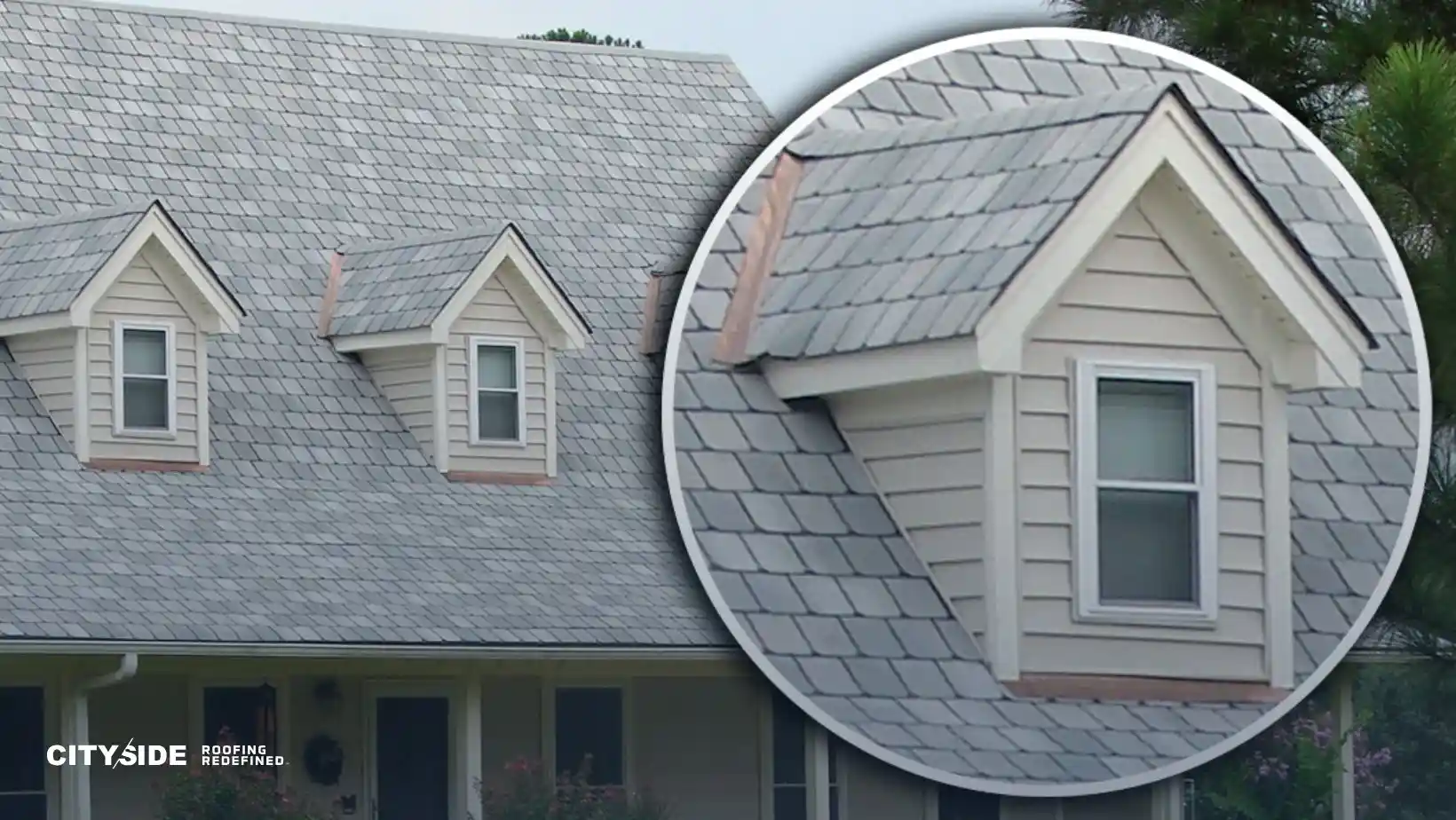
Most roof leaks do not originate in the field of the roof system. They originate at transitions.
Critical inspection zones include:
- Chimney flashing
- Skylight curbs
- Pipe boots
- Wall terminations
- Valley metal overlaps
Preventative roof maintenance requires confirming:
- No lifted edges
- No sealant cracking
- No exposed fasteners
- Proper overlap continuity
For builders, flashing issues often become warranty issues quickly, especially in multi-unit developments.
Related technical reading: Why Replace Roof Tiles? 7 Reasons and Benefits
Surface-Level Maintenance: Debris, Branches, and Material Stress
Builders should not underestimate environmental debris impacts, especially in Florida communities with mature landscaping.
Preventative actions include:
- Trimming overhanging branches
- Removing organic buildup from roof planes
- Preventing algae and moisture retention
Debris traps water, accelerates material breakdown, and increases load in valleys.
Tile, slate, and high-end systems require even stricter debris management due to material weight and structural sensitivity.
Related system considerations: Slate Roofing Systems: High‑End Performance with Structural Tradeoffs
Preventative Maintenance and Warranty Risk Reduction
From a builder perspective, preventative roof maintenance is directly tied to warranty cost control.
A structured program reduces:
- Emergency leak calls
- Interior damage claims
- Disputes over maintenance responsibility
- Rework during warranty periods
Builders should ensure maintenance plans include:
- Photo documentation
- Trade partner inspection reports
- Clear repair escalation pathways
- Compliance with manufacturer warranty terms
Partnering with a Roofing company for custom home builders ensures warranty resolution is fast, documented, and builder-aligned.
Code Compliance Considerations in Florida Roof Maintenance
Florida Building Code requirements extend beyond installation. Roof drainage, flashing integrity, and structural load limits remain performance expectations over time.
Preventative maintenance supports compliance by:
- Preventing ponding beyond allowable thresholds
- Ensuring overflow pathways remain functional
- Confirming roof edge securement remains intact
- Reducing moisture intrusion into structural assemblies
For production builders, maintaining compliance reduces legal exposure and improves long-term asset durability.
Operational Efficiency: Standardizing Maintenance Across Communities
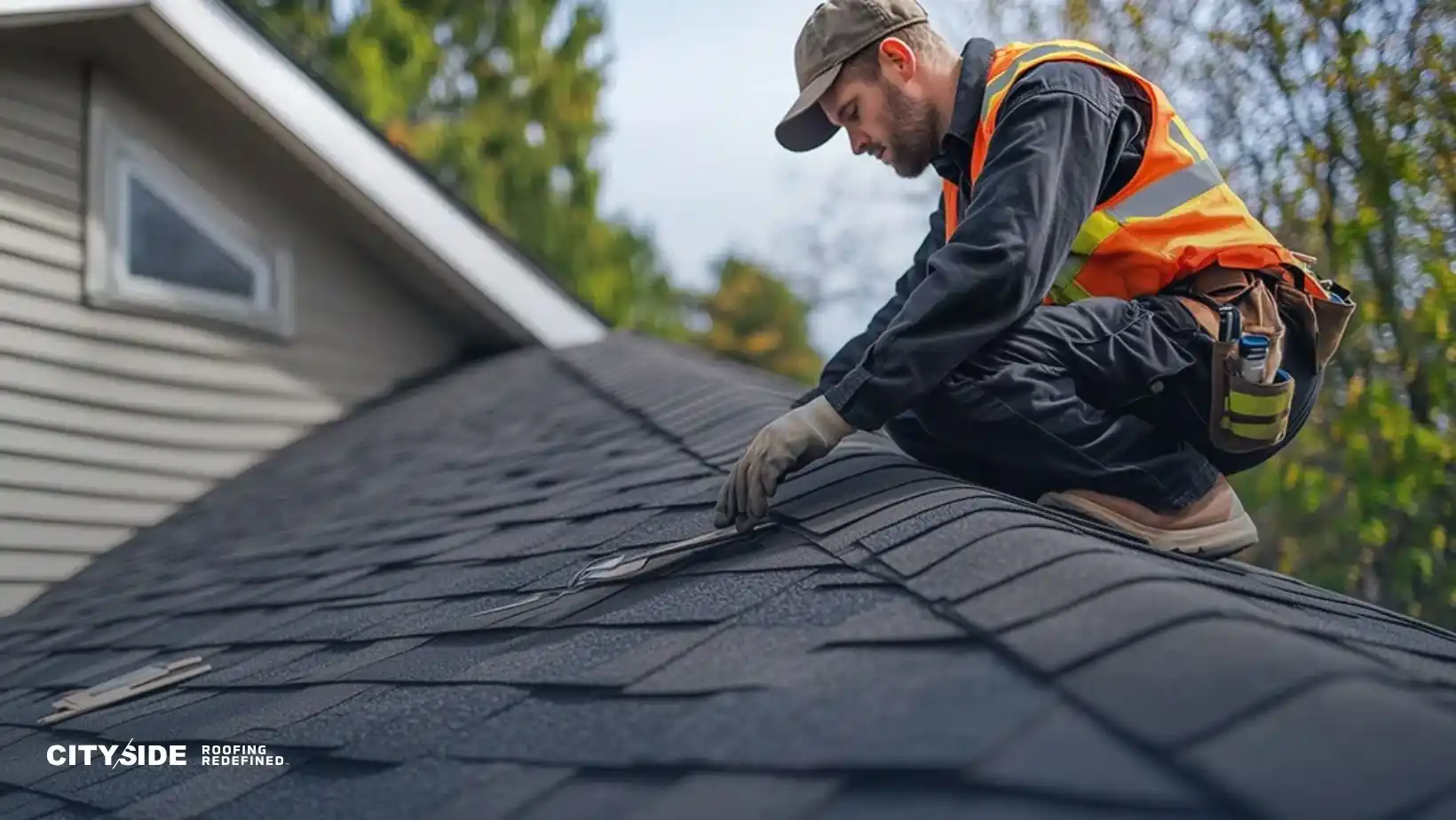
Builders managing multiple subdivisions need repeatable systems, not ad hoc repairs.
A scalable preventative roof maintenance program includes:
- Standard inspection templates
- Centralized scheduling
- Trade partner consistency
- Clear documentation storage
CitySide supports builders as a Roofing trade partner in Florida for custom homes by aligning maintenance workflows with builder operations.
Builder Maintenance Program Comparison
| Approach | Outcome | Risk Level |
| Reactive repairs only | High callbacks, unpredictable cost | High |
| Annual informal checks | Some prevention, inconsistent tracking | Medium |
| Structured bi-annual program | Reduced warranty claims, predictable outcomes | Low |
| Trade partner integrated QC system | Highest consistency and documentation | Lowest |
Preventative Roof Maintenance Best Practices for Builders
To summarize the most effective preventative actions:
Core Tasks
- Bi-annual roof inspections
- Drainage clearing and verification
- Flashing and penetration review
- Sealant and caulk condition checks
- Debris and branch management
- Post-storm assessment protocols
Builder Execution Priorities
- Document everything
- Standardize across communities
- Integrate with warranty workflows
- Partner with proven roofing specialists
Builders seeking consistent execution should work with Roofers for luxury home roofing installation and large-scale new construction systems.
Conclusion: Preventative Maintenance as a Builder Standard
Preventative roof maintenance is not a homeowner responsibility first. It is a builder performance strategy.
Builders who implement structured inspection cycles, drainage management, and flashing verification reduce warranty exposure, improve long-term roof durability, and maintain operational excellence across projects.
The best results come from aligning maintenance with:
- Production scheduling
- Quality control systems
- Code compliance frameworks
- Trade partner accountability
Working with CitySide Roofing helps builders maintain consistency, reduce callbacks, and protect long-term project value.
Key Builder Takeaways
- Preventative roof maintenance reduces warranty risk and protects builder reputation
- Bi-annual inspections are the most effective scheduling standard
- Drainage performance is the leading preventable failure category
- Flashing zones require consistent verification across builds
- Standardized documentation improves compliance and closeout quality
- Trade partner integration ensures long-term operational consistency
To implement a builder-grade preventative roof maintenance strategy that aligns with Florida codes, production scheduling, and warranty protection, connect with CitySide today!