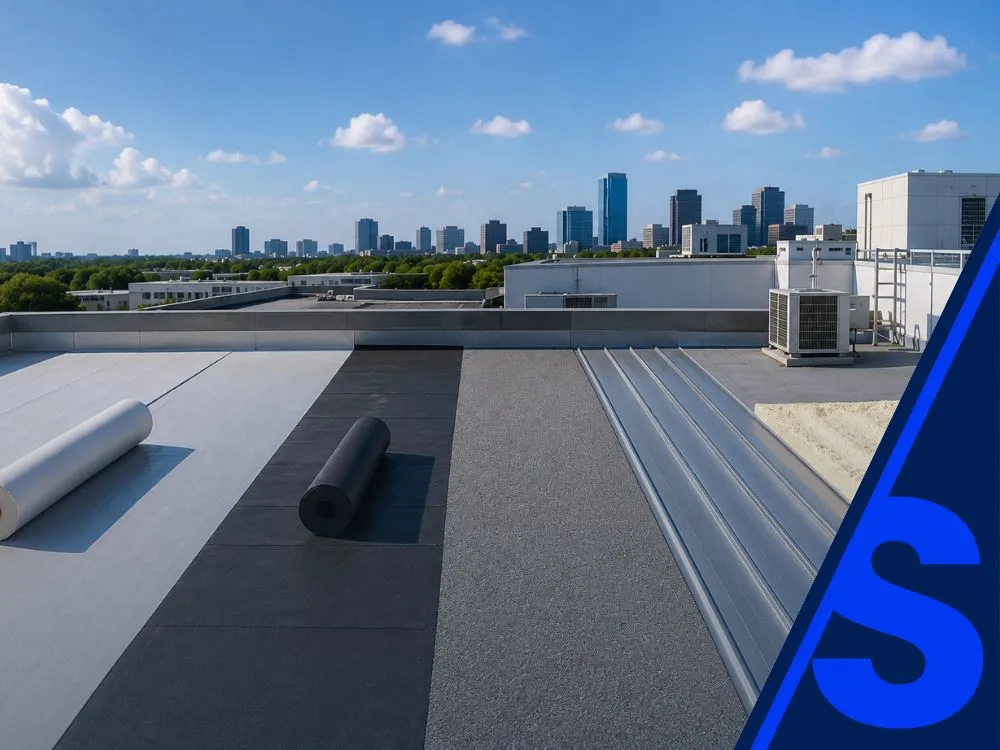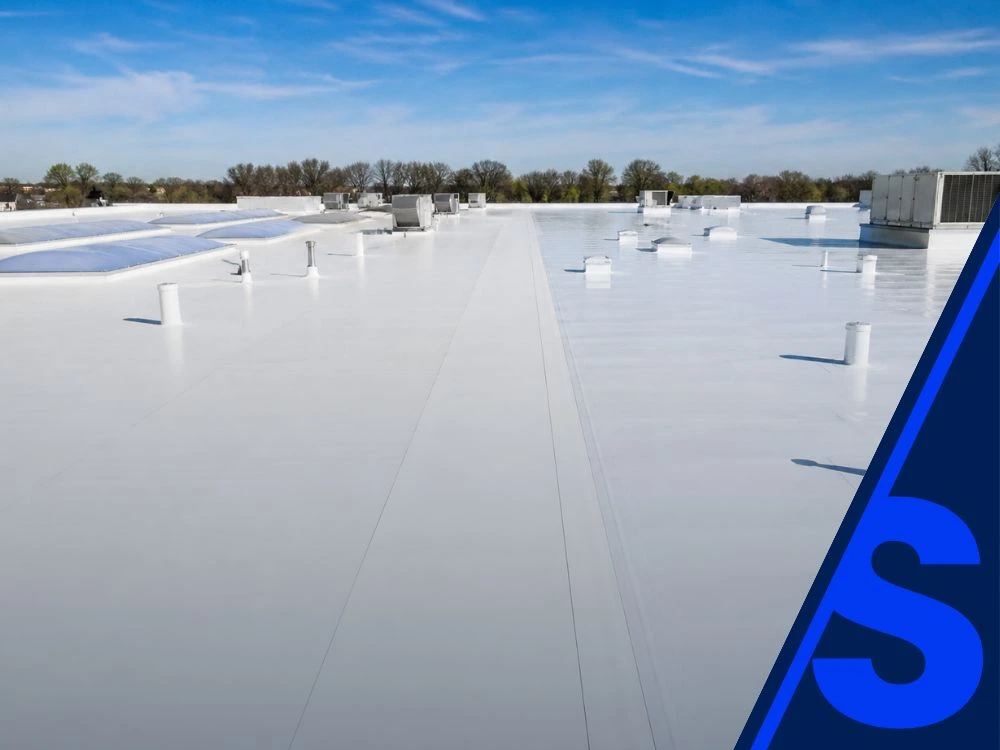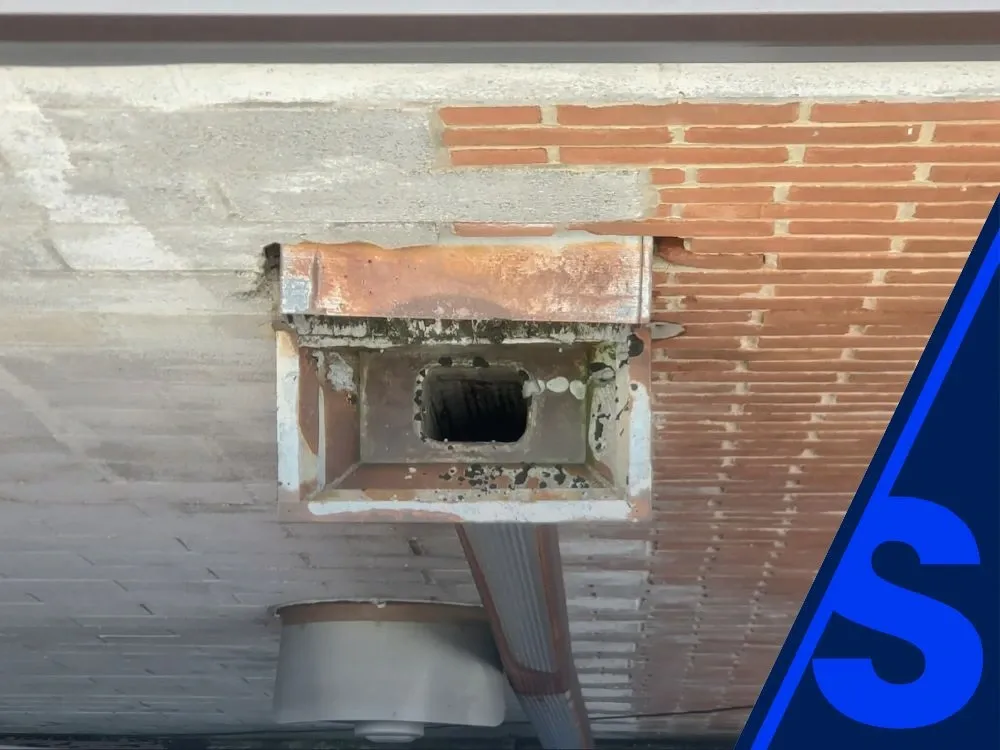
Roof scupper flashing and parapet integration are critical components of a flat or low-sloped roof drainage system, involving the creation of a watertight opening through a parapet wall to prevent water accumulation and structural damage. Proper integration ensures efficient water flow away from the building structure, reduces long-term risk, and supports code-compliant performance on new construction projects.
What is the purpose of a roof scupper?
A roof scupper allows water to drain off a flat or low-slope roof by directing it through a parapet wall or roof edge, preventing ponding water and structural stress.
What is a parapet on a roof?
A parapet is a portion of the wall that extends above the roof surface, commonly used on commercial and multifamily buildings for edge protection, fire separation, and architectural design.
What is the purpose of scuppers?
Scuppers provide a controlled path for water to exit the roof surface, helping manage rainfall and reduce the risk of leaks, membrane failure, and structural damage.
What is the difference between a scupper and a roof drain?
A scupper drains water horizontally through a parapet or roof edge, while a roof drain directs water vertically through piping inside the building.
Roof drainage is one of the most critical and most scrutinized aspects of flat and low-slope roof design. For builders working on multifamily, mixed-use, and commercial projects, roof scupper flashing is not a detail that can be treated as an afterthought. Poorly executed scupper and parapet integration is a common source of leaks, failed inspections, warranty claims, and long-term structural damage.
Unlike interior roof drains, scuppers interact directly with parapet walls, exterior cladding systems, and edge conditions. This makes them especially sensitive to flashing errors, sequencing issues, and trade coordination failures. When scupper flashing is designed and installed correctly, it provides a durable and predictable drainage solution. When it is not, water intrusion often follows.
This guide breaks down scupper flashing from a builder’s perspective, focusing on system integration, sequencing, code expectations, and quality control considerations that matter in new construction.
According to the Federal Emergency Management Agency guidance on low-slope roofing systems, proper roof drainage design including scuppers is essential to prevent excessive ponding loads and moisture intrusion that can compromise roof membranes and structural components.
Understanding Roof Scupper Flashing Systems

Scupper flashing refers to the combination of metal, membrane, and sealant components used to waterproof the opening where water exits the roof through a parapet wall. The scupper itself is the opening or sleeve, while the flashing ensures continuity between the roof membrane and the vertical wall assembly.
In flat roof construction, scupper flashing must manage multiple forces at once. It must resist hydrostatic pressure from ponding water, thermal movement of the parapet, and wind-driven rain. Because the scupper penetrates both the roof membrane and the wall system, it becomes a convergence point for multiple assemblies.
From a builder standpoint, scupper flashing should always be treated as a system detail rather than a single component. This includes the roof membrane, the scupper sleeve or box, interior and exterior metal flashing, and termination into wall finishes.
The Role of Parapet Walls in Roof Drainage
Parapet walls serve several purposes, including fire separation, fall protection, and architectural definition. In drainage design, parapets also create a condition where water cannot exit the roof edge naturally unless a controlled opening is introduced.
Scuppers provide that controlled opening. However, parapet walls also increase risk because they trap water on the roof surface if drainage is undersized or improperly placed. This makes scupper location, elevation, and flashing continuity especially important.
Builders must ensure parapet heights and scupper elevations align with structural slope and drainage plans. A scupper placed too high above the roof surface defeats its purpose. A scupper placed too low without proper flashing can allow water intrusion into the wall assembly.
Why Scupper Flashing Is a Common Failure Point
Roof scupper flashing failures are rarely caused by material defects alone. Most failures stem from coordination and execution issues. Common causes include incomplete membrane wrap into the scupper opening, improperly welded metal sleeves, incompatible flashing materials, and poor sequencing between roofing and wall trades.
Another frequent issue is reliance on sealants instead of mechanical and membrane-based waterproofing. Sealants degrade over time and should never be the primary line of defense at a scupper.
For builders, these failures often surface months or years after project completion, well into warranty periods. Addressing scupper flashing correctly during construction is far less costly than remediation after occupancy.
Scupper Flashing Versus Roof Drains
Understanding the distinction between scuppers and roof drains is important when selecting drainage strategies. Roof drains collect water at low points and route it internally through piping systems. Scuppers allow water to exit horizontally through the building envelope.
Scuppers are often preferred in regions with heavy rainfall because they provide visible drainage and act as secondary overflow points. They also reduce reliance on interior piping systems that can clog or fail.
However, scuppers require more detailed integration with parapet walls and exterior finishes. Builders must weigh these trade-offs during design development and ensure details are fully resolved before construction begins.
Code and Design Considerations for Scupper Flashing
Building codes typically require positive roof drainage and secondary overflow provisions. Scuppers are commonly used to satisfy overflow requirements on flat roofs. Their sizing and placement must account for rainfall intensity, roof area, and slope.
Codes also require scuppers to be lined with corrosion-resistant materials and integrated with the roof membrane. In many jurisdictions, scupper details are reviewed closely during plan check and inspection because of their history as failure points.
Builders should confirm that scupper flashing details are included in construction documents and reviewed by all relevant trades. Field improvisation at scuppers is a common cause of noncompliance.
Proper Integration of Scupper Flashing With Roof Membranes
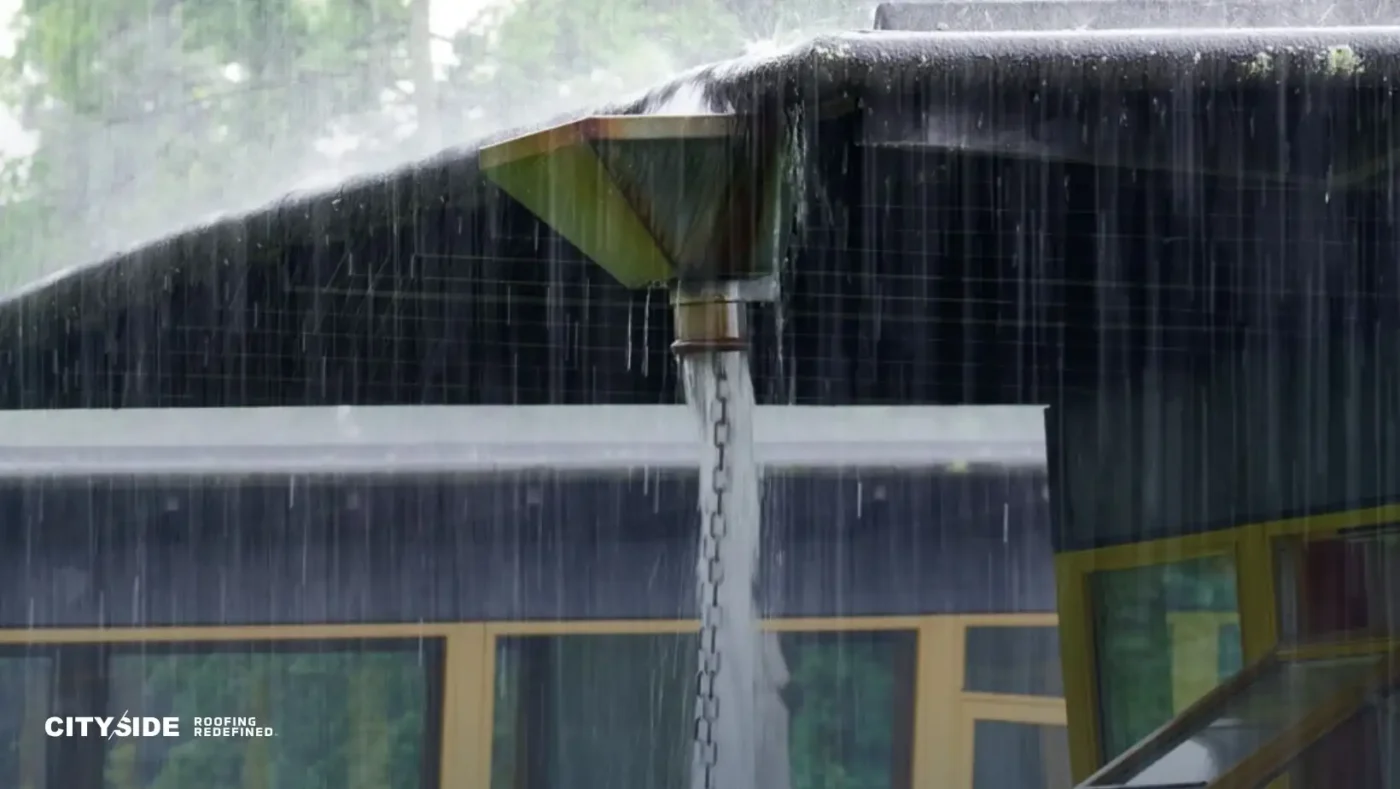
Successful scupper flashing begins with membrane continuity. The roof membrane must extend into the scupper opening and terminate in a manner compatible with the scupper sleeve or liner. This creates a continuous waterproof path from roof surface through the parapet.
In many systems, this involves wrapping the membrane into the scupper throat and securing it mechanically or through heat welding. Metal scupper boxes are then installed over or integrated with the membrane.
Builders should ensure the roofing contractor installs scupper flashing components before parapet coping and exterior finishes are completed. Once walls are closed, correcting flashing defects becomes significantly more difficult.
Metal Scupper Liners and Flashing Materials
Metal scupper liners are commonly fabricated from stainless steel, copper, or coated steel. The choice of material should consider corrosion resistance, compatibility with roof membranes, and exposure conditions.
The liner should extend fully through the parapet wall and project beyond the exterior face to prevent water from running back along the wall. Drip edges or kick-outs at the exterior termination help direct water away from the building facade.
Builders should require shop drawings for custom scupper liners on larger projects. This ensures proper fit and coordination with wall thickness, coping dimensions, and membrane terminations.
Parapet Coping and Scupper Coordination
Parapet coping caps protect the top of the parapet wall from water intrusion. When scuppers pass through parapet walls, coping design must accommodate the scupper opening without compromising waterproofing.
Coping joints, end dams, and scupper penetrations should be detailed together. Coping should never rely on sealant alone around scupper penetrations. Properly fabricated end dams and welded seams are essential.
Builders should sequence coping installation after scupper flashing and roof membrane work is complete and inspected. This sequencing supports quality control and reduces rework.
Drainage Performance and Water Flow Management
Scuppers must be sized and located to handle design storm events. Undersized scuppers can lead to ponding water, increased roof loading, and membrane stress.
On large roofs, multiple scuppers may be required to distribute drainage evenly. Overflow scuppers should be placed slightly above primary drainage elevations to activate only during extreme events.
Builders should verify that finished roof slopes direct water toward scuppers and not away from them. Even a well-flashed scupper cannot compensate for poor slope design.
Quality Control and Inspection Considerations

From a builder risk perspective, scupper flashing should be a defined inspection milestone. Visual inspection of membrane continuity, metal liner installation, and termination details should occur before concealment.
Photo documentation of scupper flashing assemblies is a best practice, particularly on multifamily and production projects. This documentation supports warranty defense and future troubleshooting.
Builders should also ensure that scuppers are protected during construction to prevent debris accumulation that could obstruct drainage.
Long-Term Performance and Maintenance Implications
While scupper flashing is a construction detail, its performance affects the entire life of the roof. Properly integrated scuppers reduce membrane stress, limit water exposure at parapets, and extend roof service life.
Poor scupper detailing often leads to repeated leak investigations that are difficult to diagnose because water travels within wall assemblies. Investing time in correct installation upfront minimizes these long-term issues.
For builders, consistent scupper detailing across projects also improves predictability and reduces variation between crews and trades.
Common Mistakes Builders Should Avoid
One common mistake is allowing wall cladding or stucco to be installed before scupper flashing is complete. Another is substituting field-fabricated flashing for specified components without approval.
Relying on sealant instead of membrane and metal integration is another frequent error. Sealant should supplement a waterproofing system, not replace it.
Builders should also avoid assuming scupper details are standard. Each project has unique wall assemblies, roof systems, and drainage requirements that must be coordinated.
Conclusion
Roof scupper flashing and parapet integration are small details with outsized impact. When designed, sequenced, and installed correctly, scuppers provide reliable drainage and protect the roof and structure. When overlooked, they become one of the most common and costly sources of roof failure.
For builders, success lies in treating scupper flashing as a system detail that requires coordination, documentation, and inspection. Clear detailing, proper materials, and disciplined execution are the keys to long-term performance.
Related Reading: