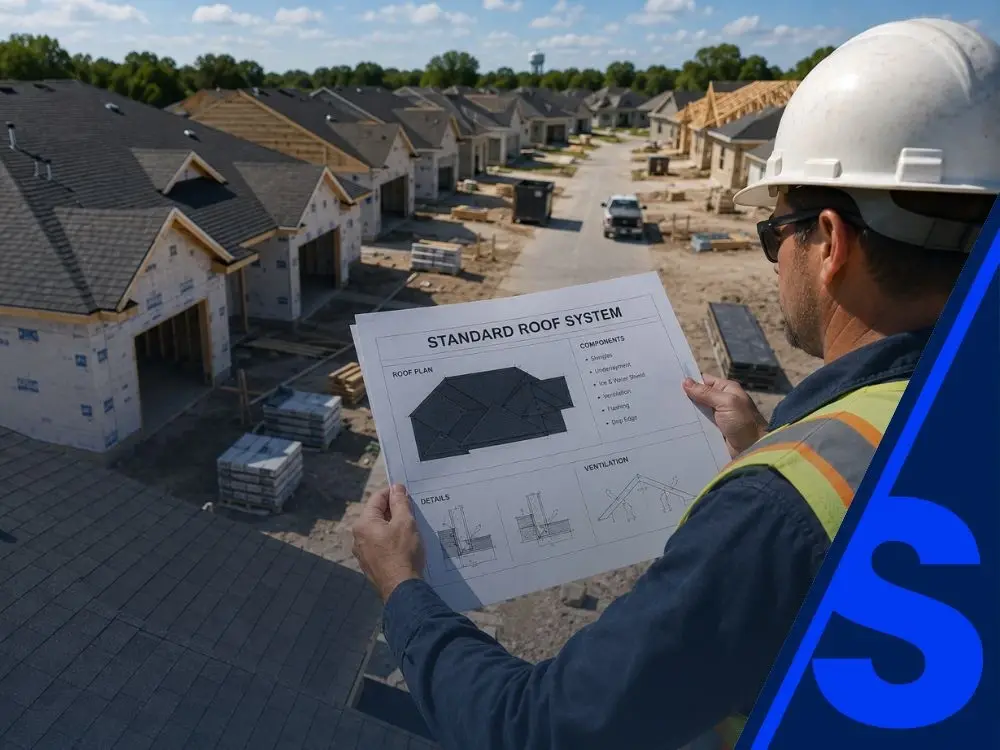
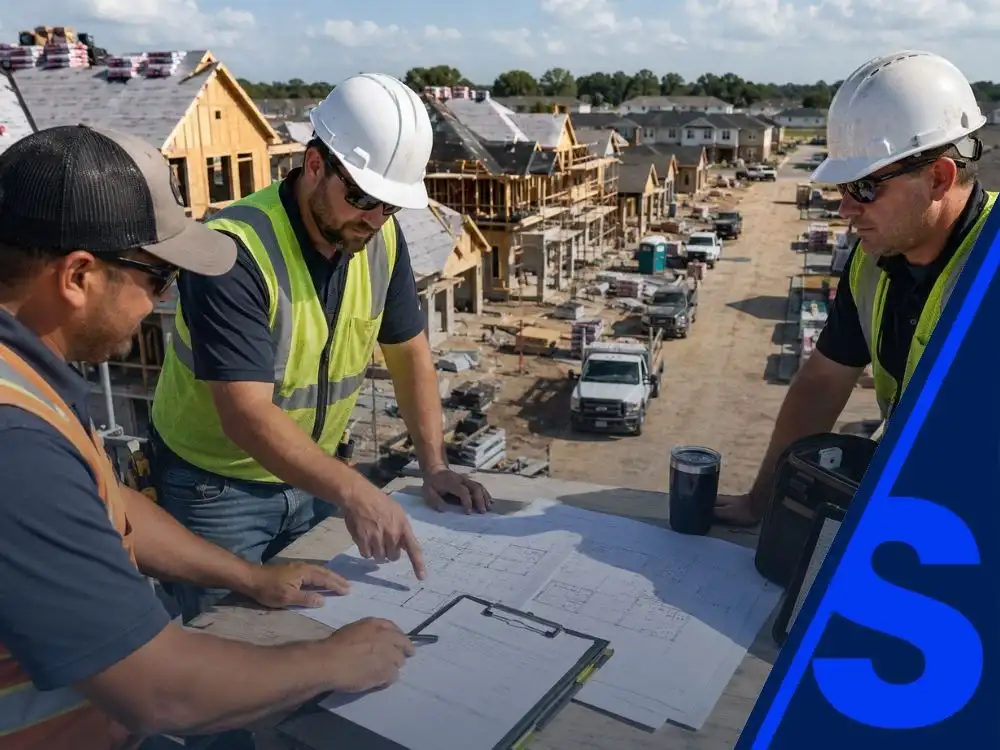
Real-time roofing data refers to the immediate, actionable information used by contractors to streamline operations, improve accuracy, and boost sales. It encompasses AI-driven aerial measurements, live weather updates, material pricing feeds, inspection logs, and project tracking dashboards. For home builders, real-time roofing data strengthens production scheduling, improves inspection and code compliance, reduces warranty exposure, and enhances operational efficiency across new construction communities.
What software is used to measure roofing?
Roofing measurement software typically includes AI-driven aerial measurement platforms, drone-based modeling tools, CAD integrations, and construction management systems with takeoff functionality. These platforms generate roof dimensions, slope calculations, waste factors, and material quantities directly from aerial imagery or plan sets, helping builders standardize estimating and scheduling.
What should a roof report include?
A comprehensive roof report for new construction should include roof area calculations, slope data, material specifications, underlayment details, flashing requirements, ventilation design, code compliance checkpoints, inspection logs, and photographic documentation. Builders rely on these reports to validate installation quality and protect warranty defensibility.
What are the top 5 roofing materials?
In new construction, the top five roofing materials include asphalt shingles, metal roofing systems, clay or concrete tile, TPO membranes, and modified bitumen systems. Each material varies in structural load requirements, installation timelines, inspection sensitivity, and lifecycle performance.
What is SRS roof hub?
SRS Roof Hub is a digital platform developed by a national roofing supply distributor that provides contractors with online ordering, account management, and delivery tracking. For builders, similar supplier platforms can integrate with ERP systems to provide real-time material availability and pricing visibility.
Why Real-Time Roofing Data Matters to Builders
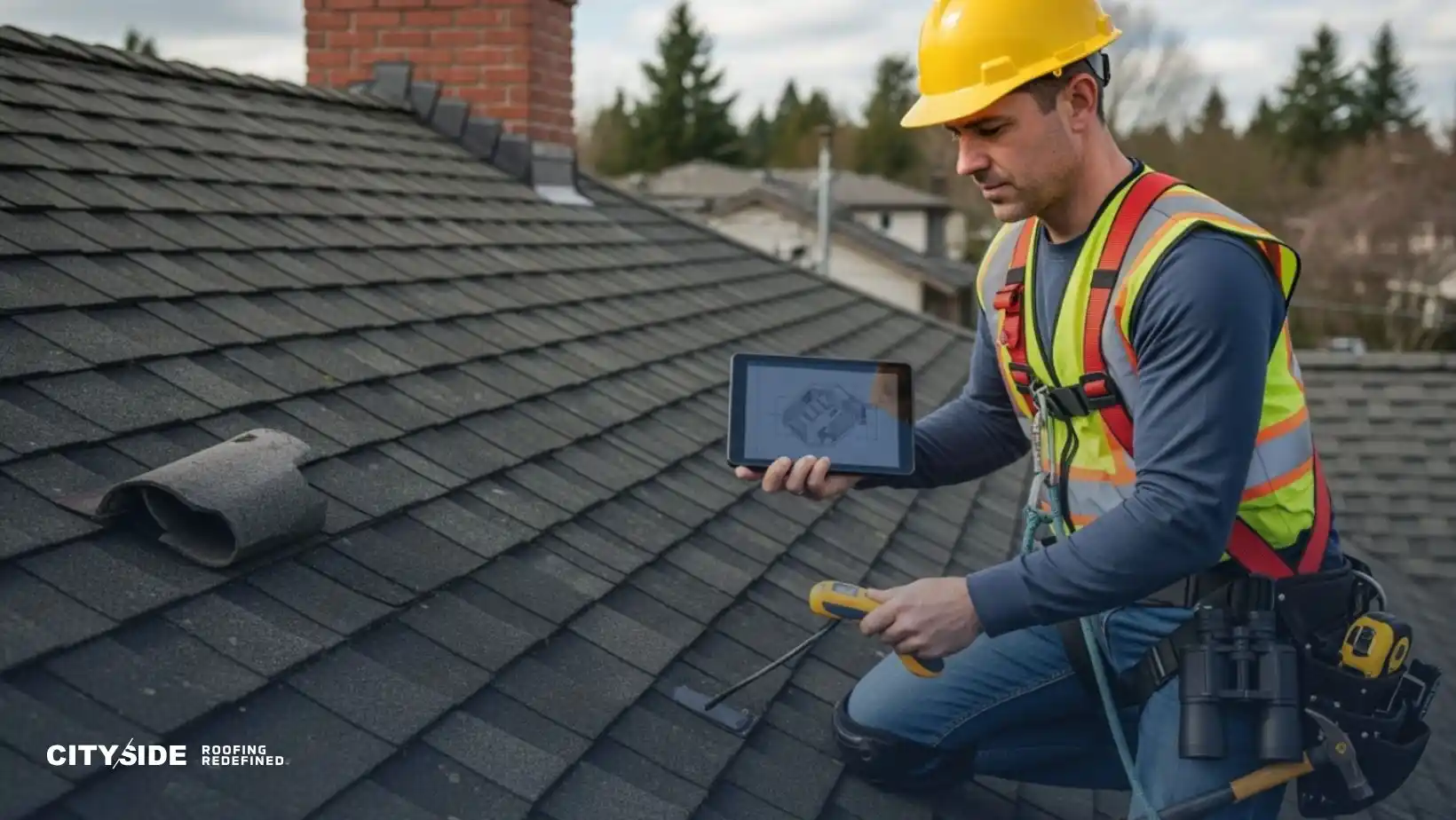
Home builders operate in a production environment where timing, documentation, and coordination determine profitability. Roofing is one of the most schedule-sensitive scopes in new construction. A missed delivery, inaccurate measurement, or inspection delay can disrupt dry-in and stall interior trades.
Real-time roofing data eliminates guesswork. It replaces delayed updates and manual tracking with immediate visibility into measurements, material availability, crew status, inspection results, and weather impacts.
According to the National Institute of Building Sciences, “Better data and improved information management are essential to increasing efficiency and reducing risk in construction.” Source: National Institute of Building Sciences
For builders managing multiple starts per week or high-complexity custom homes, data velocity is operational leverage. Real-time roofing data becomes the communication bridge between builders and vendors, reducing friction and protecting schedules.
What Is Real-Time Roofing Data in New Construction?
Real-time roofing data refers to continuously updated, accessible information tied directly to roofing scopes in active builds. It includes:
- AI-generated roof measurements
- Live material pricing and availability
- Weather monitoring tied to job sites
- Crew dispatch and completion timestamps
- Inspection booking and approval status
- Photo documentation logs
- Job cost tracking and variance alerts
For production builders, this data feeds scheduling dashboards and ERP systems. For custom builders, it provides clarity on detailing, compliance, and quality checkpoints.
When integrated with a reliable Roofing trade partner in Florida, real-time roofing data improves alignment across purchasing, construction management, and field supervision teams.
The Communication Problem Real-Time Data Solves

Traditional roofing communication relies on:
- Emails and text threads
- Manual takeoffs
- Verbal schedule confirmations
- Paper inspection forms
- Delayed supplier updates
This approach creates:
- Measurement inconsistencies
- Delivery surprises
- Inspection failures
- Change order confusion
- Warranty documentation gaps
Real-time roofing data centralizes information so builders and vendors operate from the same dashboard.
AI-Driven Aerial Measurements: Eliminating Estimating Friction
Accurate takeoffs drive scheduling precision. AI-powered aerial measurement platforms analyze high-resolution imagery to calculate:
- Total roof area
- Pitch and slope
- Ridges and valleys
- Waste factors
- Flashing linear footage
Builder-Focused Measurement Comparison
Method | Turnaround Time | Accuracy Range | Production Impact |
Manual plan takeoff | 1 to 2 days | Variable | Slower scheduling |
On-site measurement | Same day | High | Requires site access |
AI aerial measurement | Minutes to hours | High with verification | Immediate material release |
For builders operating at volume, faster measurements translate into faster material ordering and improved production sequencing.
A Roofing company in Florida that leverages aerial measurement technology reduces start delays caused by quantity discrepancies.
Live Material Pricing and Availability: Protecting Budgets
Material price volatility affects roofing margins significantly. Real-time supplier integrations allow builders to see:
- Current material pricing
- Delivery lead times
- Inventory availability
- Backorder risks
Roofing Material Price Sensitivity Example
Material Type | Pricing Volatility | Lead Time Risk | Builder Strategy |
Asphalt shingles | Moderate | Low | Lock pricing per phase |
Metal panels | High | Moderate | Pre-approve shop drawings early |
Tile systems | Moderate | High | Reserve inventory per lot |
TPO membranes | Moderate | Moderate | Align with flat roof sequencing |
When vendor systems feed directly into builder dashboards, purchasing decisions become proactive rather than reactive.
Builders who coordinate with CitySide Roofing gain transparency into material pipelines that protect production pacing.
Weather Data Integration: Reducing Schedule Surprises
Weather impacts roofing more than most trades. Real-time weather feeds tied to job sites help builders:
- Adjust crew schedules
- Anticipate wind or rain delays
- Plan inspection bookings
- Protect underlayment exposure timelines
Weather Impact on Roofing Installation
Weather Condition | Installation Risk | Builder Response Using Real-Time Data |
High winds | Safety risk, fastening issues | Delay install and reschedule |
Heavy rain | Underlayment exposure | Secure dry-in or adjust sequencing |
Extreme heat | Labor fatigue | Adjust start times |
Lightning | Immediate safety shutdown | Automated alert to field team |
Real-time alerts protect both schedule integrity and safety compliance.
Inspection and Code Compliance Tracking
Roofing inspections often include:
- Decking attachment verification
- Underlayment inspection
- Flashing confirmation
- Final installation review
Real-time roofing data platforms allow builders to track:
- Inspection requests
- Inspector comments
- Pass or fail status
- Reinspection dates
Roofing Inspection Tracking Table
Inspection Phase | Status | Documentation Logged | Reinspection Needed |
Decking | Approved | Yes | No |
Underlayment | Pending | Yes | TBD |
Flashing | Approved | Yes | No |
Final | Scheduled | In progress | No |
A Roofing contractor in Florida that provides digital inspection documentation reduces cycle time drag and administrative burden.
Real-Time Data and Warranty Risk Reduction
Warranty exposure grows when documentation is incomplete or inconsistent. Real-time roofing data provides traceability for:
- Material batch numbers
- Crew assignment logs
- Installation dates
- Inspection approvals
- Photo verification
Builders managing large subdivisions benefit from centralized warranty archives. If a defect pattern emerges, data analysis identifies the affected lots quickly.
This level of traceability is critical when working with Roofers for luxury home roofing installation, where detailing complexity increases documentation requirements.
Material System Strategy: Data-Driven Decision Making
Builders frequently compare systems based on performance, cost, and scheduling implications.
For asphalt systems, layered performance considerations are detailed in this guide for Roofing company for custom home builders.
For low-slope sections, flat roof decision frameworks are explored in this Roofing trade partner in Florida resource.
Material Comparison Table for Builders
System | Installation Time | Inspection Sensitivity | Lifecycle Expectation | Best Application |
Asphalt shingles | Fast | Moderate | 20 to 30 years | Production homes |
Metal roofing | Moderate | High | 40 plus years | Coastal or custom builds |
Tile roofing | Slower | High | 40 plus years | Premium elevations |
TPO | Fast | Moderate | 20 to 30 years | Low-slope sections |
Modified bitumen | Moderate | Moderate | 20 plus years | Small flat areas |
Real-time roofing data ensures system selection aligns with scheduling constraints and inspection readiness.
Related Reading: What Is a System I vs. System II Asphalt Roof? A Builder’s Guide to Layered Performance
Job Cost and Production Analytics
Real-time dashboards allow builders to track:
- Cost per square by community
- Labor productivity rates
- Inspection pass percentages
- Change order frequency
- Weather-related delay hours
Roofing Performance Dashboard Example
Metric | Community A | Community B | Community C |
Avg install time | 2.1 days | 2.4 days | 1.9 days |
First-pass inspection rate | 92% | 88% | 95% |
Cost variance | +1.5% | +3.2% | -0.5% |
Weather delay days | 3 | 5 | 2 |
Builders gain predictive insight rather than waiting for monthly reports.
Enhancing Vendor Accountability
Real-time roofing data creates measurable accountability between builders and trade partners.
Key performance indicators include:
- On-time starts
- On-time completions
- Inspection pass rates
- Documentation completeness
- Safety compliance adherence
A Roofing trade partner in Florida for custom homes who operates transparently within data-driven systems strengthens long-term builder relationships.
Quality Control Systems Supported by Live Data
Quality control improves when issues are captured immediately rather than discovered weeks later.
Real-time QC tools include:
- Mobile photo uploads
- Checklists tied to lot numbers
- Supervisor sign-offs
- Corrective action tracking
Example QC Checklist Integration
QC Item | Verified | Photo Uploaded | Supervisor Approved |
Valley flashing | Yes | Yes | Yes |
Ridge vent alignment | Yes | Yes | Yes |
Fastener pattern | Yes | Yes | Yes |
Underlayment laps | Yes | Yes | Yes |
Builders reduce rework and protect their reputation when roofing execution is documented in real time.
Operational Efficiency Across Multiple Communities

Production builders managing multiple neighborhoods require centralized oversight.
Real-time roofing dashboards display:
- Active installs
- Pending inspections
- Material deliveries in transit
- Crew allocation by site
This eliminates communication silos between project managers, purchasing agents, and field superintendents.
When aligned with CitySide Roofing, builders gain visibility into each roof’s lifecycle from plan to closeout.
Implementation Strategy for Builders
To implement real-time roofing data systems effectively:
- Integrate measurement platforms with ERP
- Connect supplier feeds for pricing and availability
- Digitize inspection and QC workflows
- Require real-time photo documentation from vendors
- Monitor performance dashboards weekly
Builders should prioritize vendors who already operate within these frameworks.
A Roofing company in Florida that embraces real-time communication infrastructure becomes a strategic asset in production environments.
Related Reading: TPO vs. Modified Bitumen: Which Flat Roof System Is Right for Small Projects?
Conclusion: Data as the Builder’s Competitive Advantage
Real-time roofing data transforms communication between builders and vendors from reactive updates to proactive alignment.
It improves:
- Production scheduling accuracy
- Inspection and code compliance
- Material procurement timing
- Warranty documentation strength
- Operational transparency
- Cost control and forecasting
In high-volume new construction and custom build environments, data velocity equals competitive advantage.
To align your roofing operations with real-time performance visibility, collaborate with CitySide Roofing and build a data-driven roofing workflow that supports growth.
Key builder takeaways
- Real-time roofing data improves scheduling accuracy across production communities
- AI measurements accelerate takeoffs and material releases
- Live pricing and inventory feeds protect budgets and timelines
- Digital inspection tracking reduces reinspection cycles
- Centralized documentation lowers warranty exposure
- Performance dashboards enhance subcontractor accountability
- Weather integration protects both safety and schedule reliability
Ready to strengthen communication and efficiency through real-time roofing data?
Connect with a Roofing contractor in Florida to discuss implementation strategies and builder-focused roofing systems today.